How to Make Your Dishwasher Last Longer
A dishwasher that stops cleaning properly usually is not worn out. Nine times out of ten it is starved of water flow by a filter full of food scraps or spray arm holes blocked with grit. Both take a few minutes to sort, and staying on top of them is the single biggest thing you can do to keep a machine going for its full ten to fifteen years.
Here is what matters, in the order it matters.
Clean the filter every month
The filter sits in the floor of the dishwasher, usually a cylinder you twist out by hand. It catches the food that rinses off your plates so it does not get pumped back over the load. When it clogs, water stops draining freely, dishes come out gritty, and the machine starts to smell.
Twist it out, tip the gunk into the bin, and rinse it under the tap with an old toothbrush. Finish recommends cleaning the filter at least monthly, more often if you run it every day or do not scrape plates first. It is a one-minute job that prevents most of the "not draining" and "not cleaning" call-outs we get.
Check the spray arms
The spray arms are the spinning bars above and below the racks. The water comes out through small holes along them, and those holes block up with seeds, bits of label and mineral scale over time.
Lift each arm out (most unclip or unscrew), hold it up to the light, and poke any blocked holes clear with a toothpick. Bosch suggests checking the spray arms every four to six months. Give them a spin while they are back in to make sure nothing tall in the racks is fouling them, because an arm that cannot turn only cleans one patch of the load.
Keep salt and rinse aid topped up
Most dishwashers have two small reservoirs beside the detergent: one for rinse aid, one for dishwasher salt. Rinse aid helps water sheet off so glasses dry clear instead of spotty. The salt keeps the machine's water softener working.
If your machine has a salt indicator or a rinse aid light, do not ignore it. Combination tablets that claim to do everything work fine in a lot of homes, but they do not always keep up if the machine is asking for topped-up salt. NEFF's care guide is worth a read on this, and your machine's manual will tell you which reservoirs yours actually has.
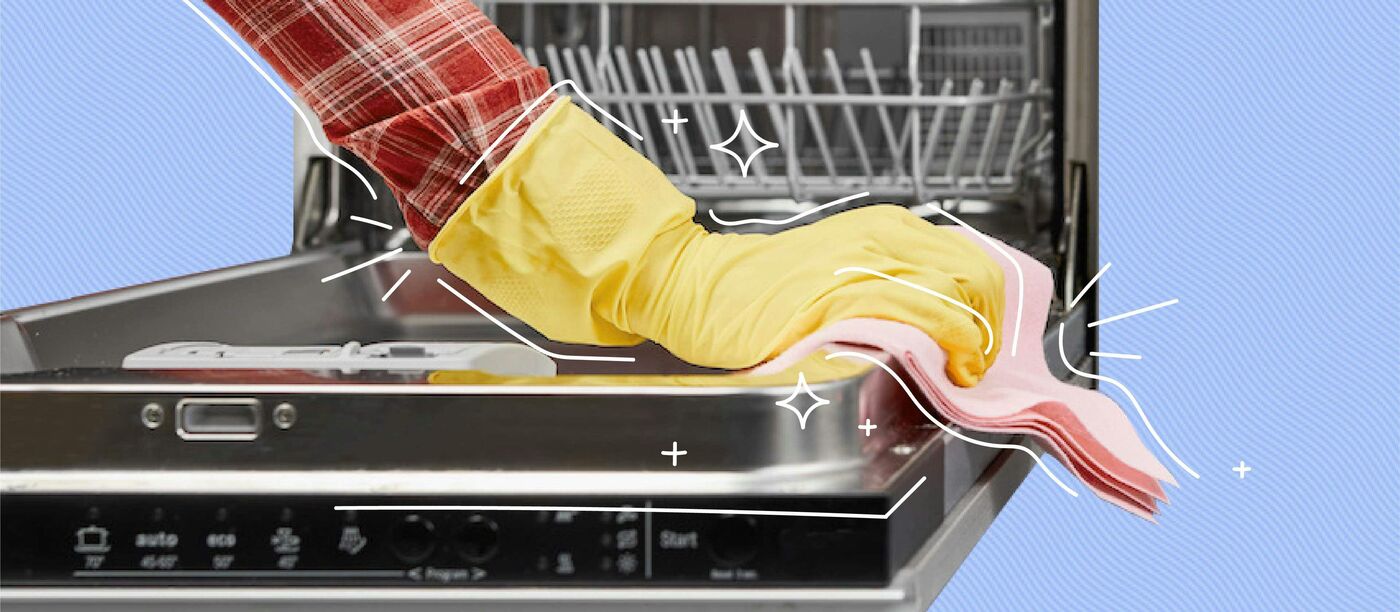
Wipe the door seal
The rubber seal around the door traps a film of grease, food and standing water, and that is where the black mould and the musty smell start. Wipe it over with a damp cloth every week or two, getting into the fold at the bottom where water pools. Leave the door ajar after a cycle so the inside dries out rather than sitting warm and wet.
A cracked or perished seal is a different problem, and it leaks onto your kitchen floor. If yours is splitting, that is a repair rather than a clean.
When it is a fault, not maintenance
Maintenance keeps a healthy machine healthy. It will not fix a pump that has failed, a heater that will not heat the water, or a control board throwing an error code. If the dishwasher still will not drain or clean the dishes after you have cleared the filter and spray arms, the fault is deeper in the machine.
That is where we come in. We service dishwashers of every major brand across the Illawarra and South Coast, usually the same day. Book a repair online or call 02 4229 3777 and we will take a look.