A thermal fuse is a one-shot safety device. It sits on or near the heater housing of a vented or conventional dryer and it has exactly one job: cut power to the heating circuit if the machine runs hotter than it should. Once it has done that, it is finished, and a technician or a competent DIYer replaces it and the machine heats again.
The fuse blowing a second time, a few loads or a few weeks after that repair, means something different. The part did its job twice. The fault that made it overheat in the first place is still there.
Why does a dryer thermal fuse keep blowing?
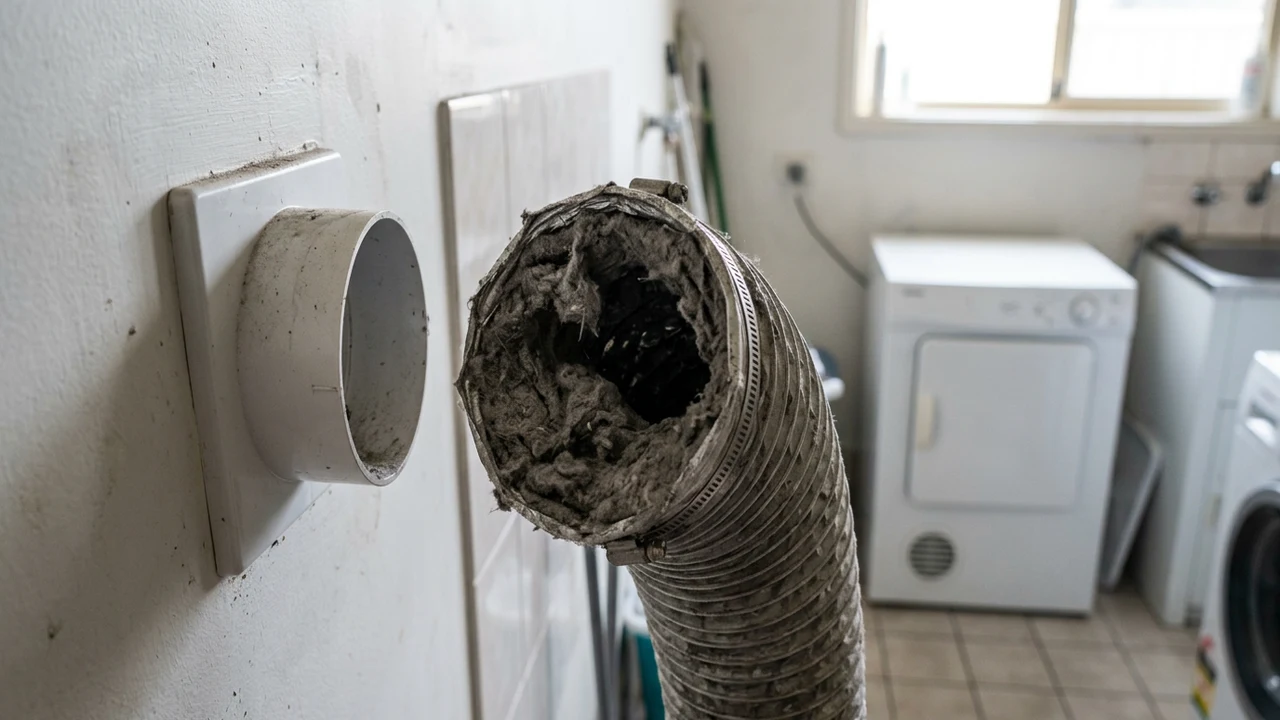
Nearly always, restricted airflow. A dryer clears the moisture it pulls out of wet clothes by pushing hot air through the drum and out through the vent. Anything that narrows that path holds the heat inside the cabinet instead of letting it escape, and the thermal fuse is set to trip well before that heat reaches a dangerous level. Replace the fuse without clearing the restriction and the next load runs exactly as hot as the last one.
The usual places air gets choked, roughly in order:
The lint filter
Not just "needs emptying" but properly matted, including the fine layer that builds up under a filter that looks clean at a glance. Wash it under a tap every few weeks; fabric softener leaves a film that lint alone does not, and that film blocks airflow the filter mesh should be passing.
The vent hose itself
Crushed behind the machine, kinked where it exits through the wall, or simply too long for the diameter. Flexible foil ducting sags and traps lint at every low point along its run; rigid duct does not, which is one reason installers prefer it on a long run. Pull the machine out and look at the full length, not just the first metre you can see.
The outside vent flap
Lint packs against the flap from inside and cobwebs or a bird's nest can block it from outside. If the flap will not swing freely when you push on it with a finger, the dryer is pushing hot air against a closed door.
The duct length and bends
A run with several tight bends, or one that is longer than the dryer's rated maximum, restricts airflow even when every part of it is clean. This is a fitting problem rather than a cleaning one, and it does not go away with maintenance.
Any one of these will do it on its own. In an older laundry with a long run to an outside wall, it is common to find two or three at once.
What a technician actually checks on a repeat callout
The fuse itself is cheap and quick to swap, so the second visit is not about the part. It is about proving the airflow is clear before the new fuse goes in, because fitting another one without doing that just books a third callout.
That means pulling the machine out fully, checking the lint filter and housing for the fine packed layer rather than the obvious lint, running a hand along the entire duct length feeling for crush points, and checking the outside flap opens freely under the airflow the machine actually produces rather than just by hand. On some machines the heating element and the cycling thermostat sit close enough to the same airflow that a chronic overheating fault has also cooked one of those, which is worth testing at the same visit rather than assuming the fuse was the whole story.
Do not bypass the fuse
It is possible to wire around a blown thermal fuse and get the dryer running again immediately. Do not. The fuse is the last line of defence against the machine overheating badly enough to start a fire, and lint fires from clothes dryers are common enough that product safety recalls on dryers turn up regularly. A dryer that needs its safety cut-out disabled to keep working is a dryer that should not be running until the actual fault is found.
The right-rated replacement fuse matters too. They look interchangeable but trip at different temperatures depending on the model, and the wrong one either trips too early on a normal load or, worse, sits too high and lets the machine run hotter than the original was designed to allow.
What to check yourself before you book
- Wash the lint filter under a tap, not just brush it, and check the housing behind it for a packed layer.
- Pull the machine out and run a hand along the full duct, feeling for crushed or kinked sections.
- Push on the outside vent flap and confirm it swings freely both ways.
- Count the bends in the duct run. More than two or three on a long run is worth mentioning when you book.
If all of that checks out clean and the fuse still blows, the fault has moved past what a look and a feel will find, and it is a job for a technician with airflow-testing gear.
Booking a second visit
The assessment is $125 across the Illawarra and $145 for the far South Coast, and it covers the fuse, the element and thermostat check, and a proper look at the vent run, not just the part that failed. If a first repair on your machine was done by someone else and it has blown again, tell us that when you call, because it changes what we bring on the van. Our dryer repair page has the full fault list, and dryer not heating or taking too long to dry covers the airflow checks in more depth if you want to work through them before booking.
We cover vented, condenser and heat pump dryers on every major brand from Helensburgh through Wollongong and Shellharbour to Nowra. Book online or call 02 4229 3777.