The cycle ran overnight, the kitchen smelt like a bonfire for a while, and this morning the oven is stone cold with a tray of grey ash in the bottom and a door that will not open. The lock symbol is still lit, or it has gone out and the door still will not budge, and you have people coming for dinner.
It is one of the more common calls we get on a Monday, and it is not a coincidence that it follows a self-clean. A pyrolytic cycle takes the cavity up to somewhere around 480 degrees and holds it there for two or three hours. Nothing else the oven does comes close. If a part was tired, that is when you find out.
Why the door stays shut
The door lock on a pyrolytic oven is not a latch you can override. It is a small motorised bolt driven by the control board, and it stays engaged until the board sees a cavity temperature it considers safe. That is deliberate, and it is the right design, because a door that could be pulled open at 400 degrees would be a genuinely dangerous thing in a kitchen.
So when it stays locked, it is usually one of three things. The temperature sensor is reading high when the oven is actually cold, so the board thinks it is still dangerous. The lock motor has jammed or burnt out. Or the board itself has lost the plot after three hours of heat soak.
The one thing worth trying yourself is a proper power cycle. Not the front panel. Switch the oven off at the isolating switch on the wall, or at the circuit breaker if it is hardwired with no visible switch, and leave it off for twenty minutes. A fair few units release the lock on the next power-up once the board has forgotten what it was doing.
What not to do is get a screwdriver into the door gap and lever. I have replaced enough bent doors and cracked inner glass that started with a lever. The glass in an oven door is toughened, and when toughened glass goes, it goes everywhere at once.
Why it refuses to start in the first place
The other half of these calls is the opposite problem. You press the self-clean button and the oven beeps at you, or nothing happens at all.
Almost always the door is not quite home. The lock will not engage unless the door is fully closed against the seal, and a door seal that has hardened and shrunk with age, or a hinge that has dropped a little, is enough to keep the switch from making. Push the door firmly shut and try again. If it starts, your seal or your hinges need attention regardless.
Some models will also refuse to run if there is a stored error code, or if the cavity is still hot from cooking, or if the racks are in. That last one matters more than people think. Unless the manual specifically says the racks are pyro-safe, they come out. Ordinary chrome racks lose their plating in a self-clean and come out dull, rough and rusting within a month, and once the plating has gone there is no fixing it.
When the oven is dead afterwards
This is the one that costs money. The cycle finishes, the door eventually opens, and the oven will not heat at all.
Most often that is the thermal cut-out. It is a one-shot safety device that opens if the cabinet gets hotter than it should, and it does not reset itself. Once it is gone the oven is dead until it is replaced. The cut-out did its job, but it also usually points at something else, like a cooling fan that has slowed or stopped, so replacing the fuse without working out why it blew just buys you a few weeks.
Less often it is the board, or an element that had been thinning for a year and picked the self-clean to fail during. Either way the diagnosis is the same job as any other oven that will not heat, and we cover that ground in why an oven will not heat up.
Making the next one less eventful
A few things cut the risk down.
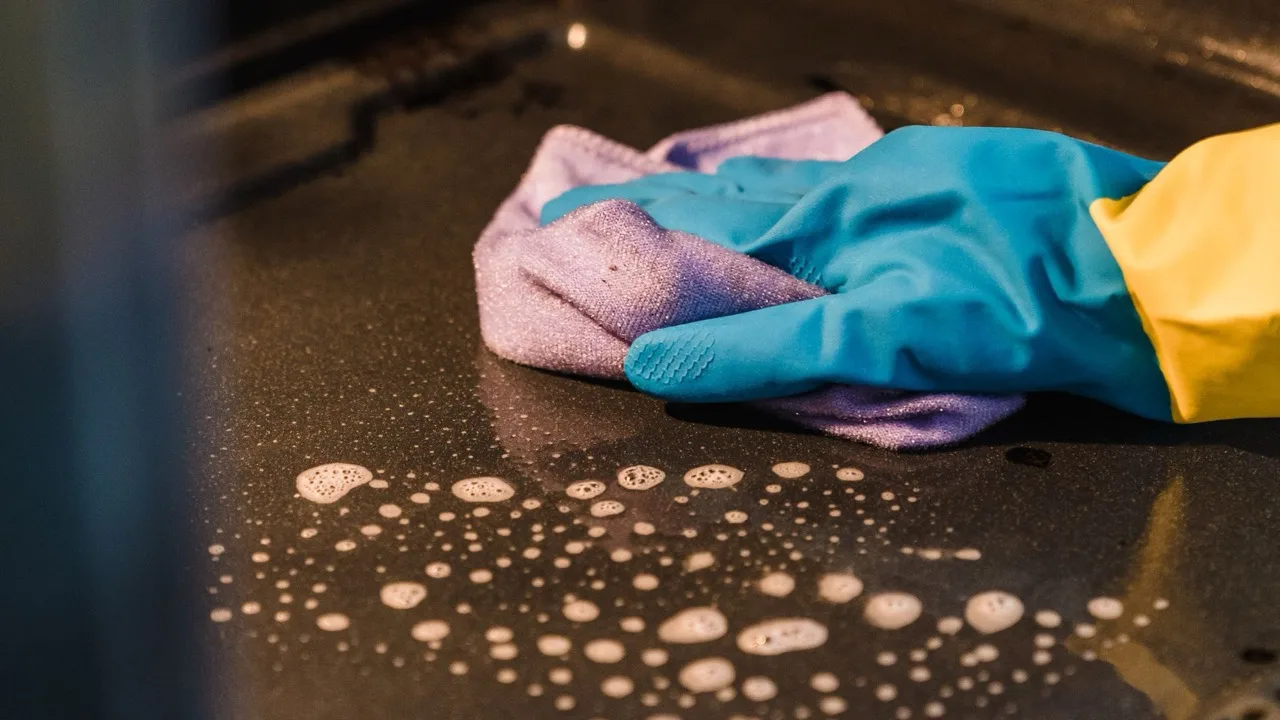
Wipe the cavity out first. A self-clean is meant to deal with the baked-on film, not with last Sunday's roasting pan of fat. A big pool of grease is what produces the smoke, and the smoke is what stains the door glass and upsets everyone in the house.
Ventilate properly. Open a window, run the rangehood, and if the rangehood is not shifting much air, sort that first, since a self-clean is exactly when you want it working. There is a fair bit on that in why your rangehood stopped extracting. If anyone in the house has asthma, or you keep birds anywhere near the kitchen, the birds go outside and stay there until the house has aired. Birds and cooking fumes are a bad combination at the best of times, and a pyro cycle is not the best of times.
Run it when you are home and awake, not overnight and not on your way out the door. And run it in the cooler months if you can, because a summer afternoon in an Illawarra kitchen with the oven at 480 for three hours is punishing for everyone.
If your oven has catalytic liners rather than a pyrolytic cycle, which is the rough textured panel on the sides, treat those differently again. They are meant to burn residue off at ordinary baking temperatures, and caustic oven cleaner will destroy the coating permanently. Same goes for the enamel around them.
What it is worth
If the oven is out of warranty and the repair is a cut-out and a cooling fan, it is worth doing, comfortably. A control board on an older unit gets closer to the line, and we will give you the numbers and let you make the call rather than push you either way. There is more on how we weigh that up in repair or replace.
Two things to check before you decide. A failure at four or five years on an appliance that should manage a good deal more is not automatically your cost to carry, because consumer guarantees keep running after the manufacturer's warranty has expired. And it is worth a minute on the product recalls register with your model number, since ovens do get recalled, occasionally for exactly this sort of fault.
The line between you and us
Yours: shut the door properly and try again, take the racks out, wipe the fat out before you run it, ventilate the room, and give the whole unit twenty minutes with the power off before you decide it is broken.
Ours: the door lock, the temperature sensor, the thermal cut-out, the cooling fan, the elements and the board. Any of those means the oven comes out of the cabinetry, and most wall ovens in NSW are hardwired rather than plugged in, which makes disconnecting one licensed electrical work. If yours runs on gas, everything past the front of it is licensed gasfitting. Neither is a confident-weekend job in this state, whatever a video tells you.
We do ovens and cooktops on every major brand across the Illawarra and South Coast, pyrolytic units included, quoted after the diagnosis and before anything gets touched. The assessment fee is $125 across the Illawarra and $145 further out. Book a repair or call 02 4229 3777 with the model number in front of you.
But the honest version of when to ring is simpler than any of that. Give it the twenty minutes off at the wall first, because that genuinely does clear a stuck lock often enough to be worth the wait. If the door opens, you have your answer and you have spent nothing. If it is still shut after that, or the oven has come back to life but will not heat, or it trips the safety switch the moment you turn it on, that is the point where poking at it further only adds to the bill. Leave it off and let someone qualified take it from there.