Induction Cooktop Not Working? Troubleshooting Guide
Written by Jozo, Lead technician
Updated
Induction cooktops are fast and efficient, but when one stops working it can be baffling, because there is no flame or glowing element to tell you what is happening. Quite often the cooktop is fine and the issue is the cookware or a setting. Work through these before assuming it has failed.
Check your cookware
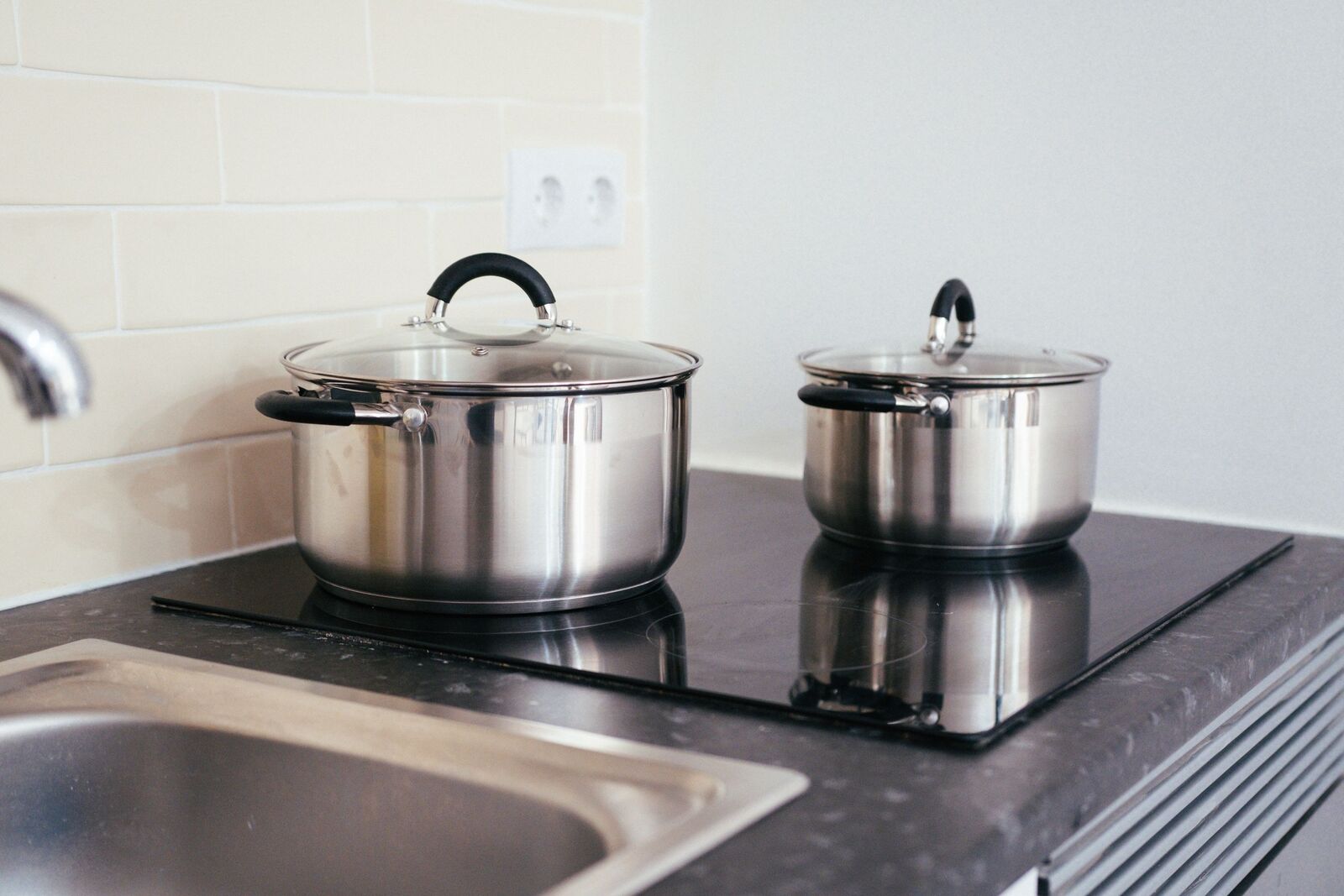
Induction only heats pans made of magnetic material. If your pot is aluminium, copper or some types of stainless steel, the cooktop will not heat it, and many models will flash an error or simply refuse to turn on the zone. Test a pan by sticking a fridge magnet to its base: if the magnet grips firmly, the pan will work. Also make sure the pan is big enough to cover the minimum area the zone needs to detect it.
Check the control lock
Almost every induction cooktop has a child lock or control lock, usually shown by a key or padlock symbol. It is very easy to activate by accident while cleaning. Hold the lock button for a few seconds to release it, as described in your manual.
Check the power
Induction cooktops draw a lot of power and are typically on their own circuit. If the cooktop is completely dead, check whether the circuit breaker in your switchboard has tripped. If it trips again as soon as you reset it, stop and call an electrician or repairer, as that indicates a fault.
Read the error code
If the display is showing a code, note it down. Codes usually indicate a specific issue such as overheating, no pan detected, or an internal fault. Overheating errors often clear once the unit cools, and can be caused by blocked ventilation underneath the cooktop.
Let it cool and ventilate
Induction units have internal fans and need airflow. If the cooktop shuts a zone off mid-cook, it may be protecting itself from overheating. Make sure nothing is blocking the vents beneath the bench.
Which symptom you have tells us where to look
Induction faults sort neatly by symptom, and describing yours properly when you book saves time. A whole cooktop that is dark and silent points at supply: the breaker, the isolator or the terminal block. A lit display where every zone refuses to heat points at the control board or a safety lockout. One zone dead while the others run points at that zone's coil or its own sensor. A zone that heats, then drops out after a minute or two, is usually protecting itself from heat, and that sends us to the fan and the airflow rather than the coil.
Noise is a clue as well. A faint hum or buzz when a pan sits on the zone is normal, particularly on high power. A fan that is loud, rattling or silent when it should be running is not. Cracks matter more than any of it: a chip or crack in the glass means switching the cooktop off at the wall and leaving it off, because liquid can reach the electronics underneath. Our cooktop repair page covers cracked glass and what it involves.
A worked example: the pan that "stopped working"
Picture this. A household buys a new pan set and, the same week, the induction cooktop starts flashing an error and will not start the zone. They book a repair, expecting a failed board. The fridge magnet test settles it in ten seconds: the new pans are aluminium-cored with a non-magnetic base, so the magnet slides off. Nothing is broken. Had they booked, the assessment would have been $125 across the Illawarra or $145 further out on the South Coast, and the money would have gone on telling them to change the pans. Run the magnet test on every pan you own before you ring anyone, and keep one pan you know works for comparison.
The reverse happens too. If the same pan works on one zone and not another, the pan is fine and the zone is the fault, which is the useful piece of information a technician wants.
Why we are careful with induction power faults
An induction cooktop is a high-power electronic appliance wired into a dedicated circuit. A tripped breaker once is worth one reset. A breaker that trips again, a burning smell or a cooktop that clicks on and off by itself is a reason to isolate it and stop. Fixed wiring is an electrician's job, and the same rule applies to the cooktop's supply connection. Our technicians handle the appliance itself, which means coils, sensors, fans and control boards, and we will say plainly when a fault sits in the supply instead.
If you are weighing repair against replacement, remember that a new induction cooktop has to match the cut-out in the benchtop and needs a licensed electrical connection, so the real cost of replacing is more than the price of the unit. Our guide to repairing versus replacing an appliance sets out how we think about that. We are an authorised repairer for Westinghouse, Bosch and Smeg, among 16 brands, so warranty cooktops are covered too.
When to call a professional
If the cookware is right, the panel is unlocked, the power is on and it still will not work, the fault is internal, likely the induction coil, a sensor or the control board. These are not user-serviceable and should only be handled by a technician.
Wollongong Service Company repairs induction and ceramic cooktops across the Illawarra and South Coast. Book a repair or call 02 4229 3777.