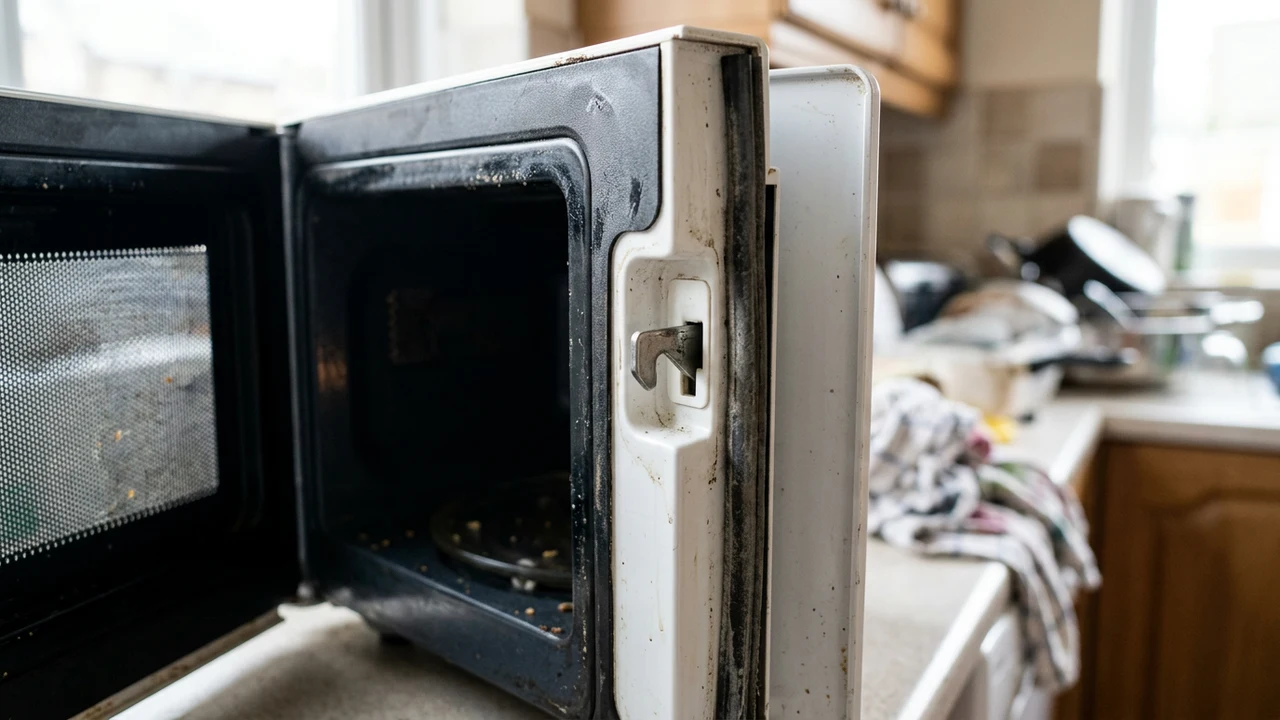
Microwave runs but the food's still cold? Here's what's happening
Written by Jozo, Lead technician
Updated
The plate turns, the light comes on, the timer counts down, and you pull the cup of coffee out stone cold. It is one of the more confusing faults we get called about, because everything looks like it is working. The microwave is doing everything except the one thing you wanted.
When a microwave runs but will not heat, the problem is nearly always on the high-voltage side, and that changes the advice a fair bit.
What "runs but won't heat" means
A microwave makes its heat with a part called the magnetron, fed by a high-voltage circuit that takes in a transformer, a diode and a capacitor. The turntable, the light and the timer run off a separate low-voltage side. So when the cabinet lights up and spins away happily but nothing gets warm, it is the heating side that has failed while the rest carries on as normal.
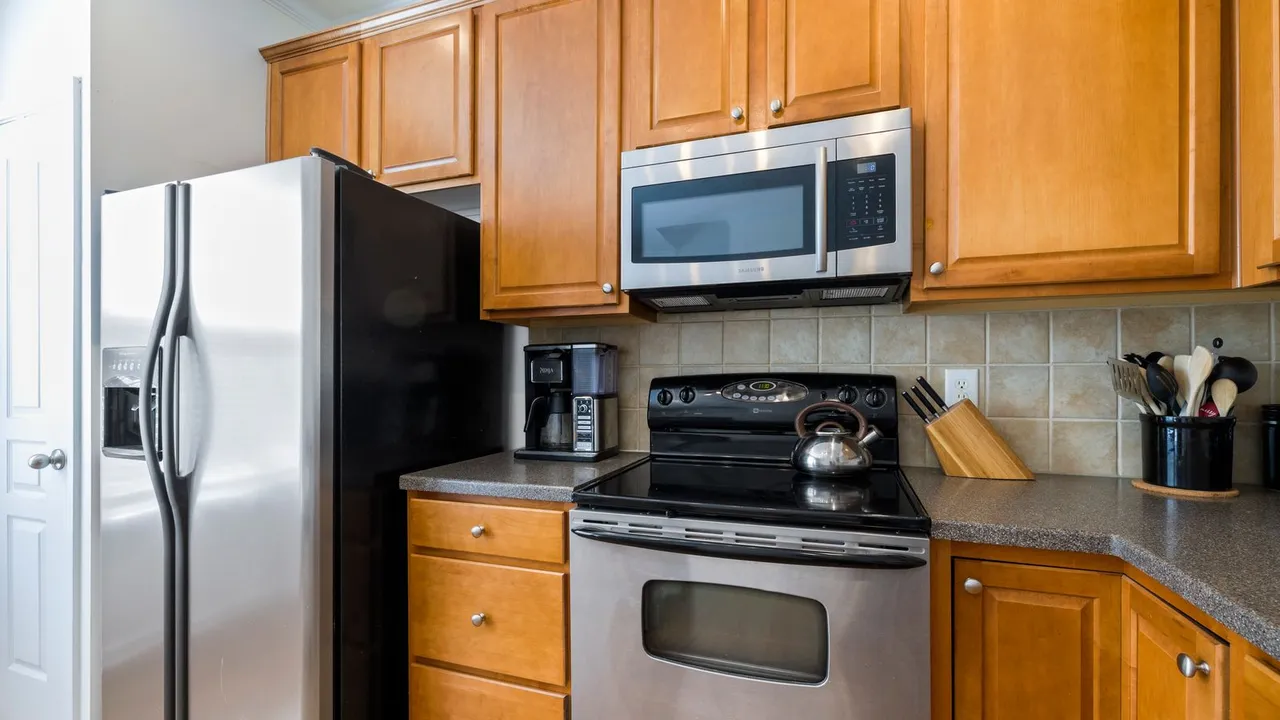
Usually it is the magnetron itself worn out, or the diode or capacitor in front of it gone. On a benchtop microwave those parts plus the labour often come close to the price of a new unit, which is worth knowing before you spend anything. On a built-in, over-range or drawer model, the kind set into cabinetry that costs several hundred to replace, a repair usually stacks up. That is where most of our microwave repair work is.
The safety bit, and why we mean it
This is the one appliance where we genuinely tell people not to open the case, and it is not us drumming up work.
That capacitor on the high-voltage side can hold a dangerous charge long after the microwave is unplugged, enough to seriously hurt you, and it does not bleed off on its own in any reliable way. Every honest repair guide and manufacturer manual carries the same warning. Discharging it safely takes the right tool and the knowledge of where to put it. Leave the inside to someone set up for it.
A couple of things worth ruling out first
Before you book anything, there are a few no-risk checks that occasionally save a call-out.
Plug something else into the same power point, or the microwave into a different one, because a dead socket looks exactly like a dead microwave. Check the door is latching fully, since the safety interlocks will not let it start, or in some cases heat, if the latch is not seating properly. And a habit worth breaking: never run a microwave empty. With no food inside to soak up the energy, it feeds back into the magnetron and can wreck it. If yours stopped heating after a run with nothing in it, that may well be the reason.
Narrowing it down from what the microwave does
A few observations are worth jotting down before you ring, because each one points at a different part. If the turntable spins and the light works but the food stays cold on every power level, the magnetron or the diode and capacitor ahead of it are the likely culprits. If food warms very slowly or only at the edges, the magnetron may be weakening rather than dead. If you hear a loud hum, buzz or a sharp crack when it should be heating, that suggests the high-voltage side is failing under load. And if the microwave works on full power but not on the lower settings, that points at the power control instead.
A quick, safe test is the cup-of-water check. Put a mug of water in, run it for a minute on high, and feel the water. Warm means the microwave is heating, only badly, and a thermometer-free comparison against a second microwave is a fair guide. Cold after a full minute means no heat at all. Either answer is worth telling the technician when you book.
Why a microwave that has been working for years suddenly stops
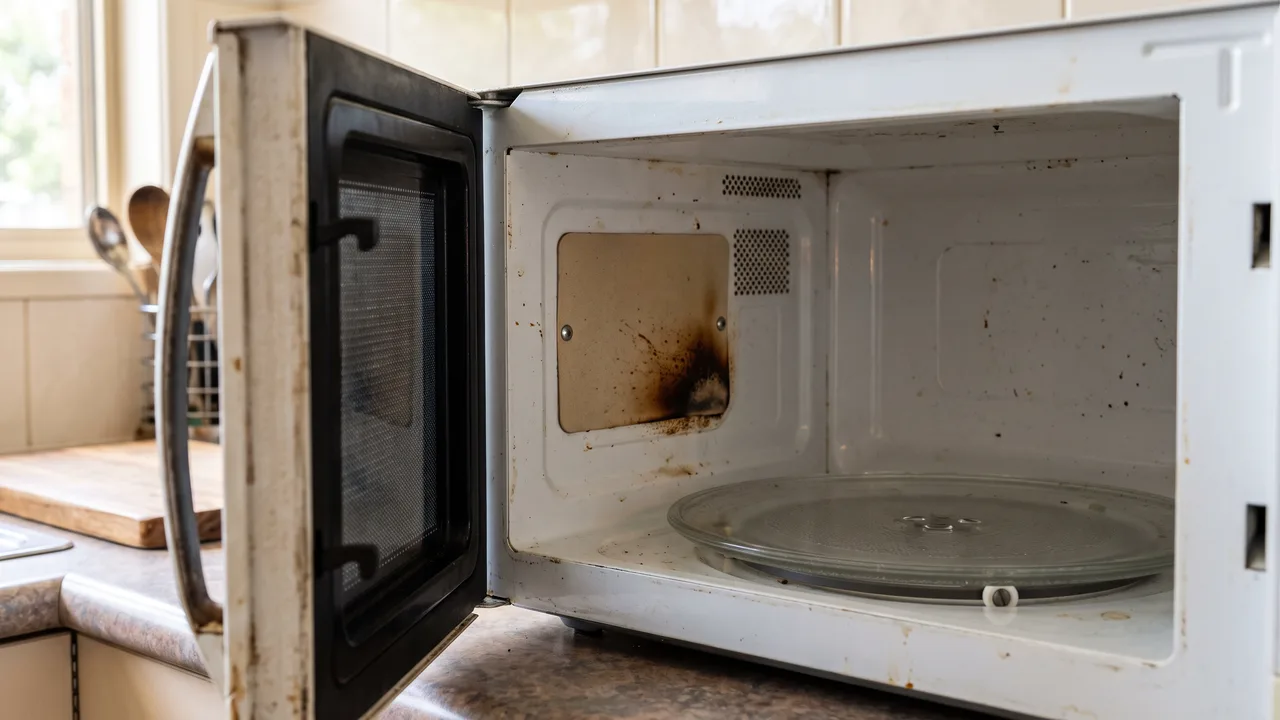
Microwaves rarely fail for dramatic reasons. The common causes are age, heat and abuse of small parts. Running it empty is the classic one, and so is leaving metal trim or a damaged cavity coating inside, because arcing burns the surface and stresses the magnetron. A power surge, such as the kind that follows a blackout, can take out the diode or the capacitor in one go, and our guide to appliance damage after a blackout lists what else in the house is worth checking afterwards. Grease and food splatter on the waveguide cover, the small panel inside the cavity wall, can also cause burning and poor heating, and that cover is something you can look at, though not replace, without opening the case.
If you see scorch marks, bubbling paint inside the cavity or a burnt smell, stop using it. Our write-up on a microwave sparking inside explains what each of those usually means.
What a visit looks like and what it costs to find out
The visit is simple. The technician checks the unit for obvious damage, tests the high-voltage components with the right meter and discharge tool, and tells you what failed. The assessment is $125 across the Illawarra and $145 further out, and the repair is quoted before any work starts. A quote is valid for 14 days, so you can compare it against a new microwave without pressure. Workmanship on the repair carries our 3-month guarantee, and genuine parts for the brands we are authorised on, which include Samsung and LG, carry the manufacturer's guarantee.
Worth knowing: if the technician finds the unit is a write-off, you pay the assessment and nothing more, and you walk away knowing what to buy instead and why the old one failed. That is the honest outcome on a lot of cheap benchtops, and it is the reason the previous section is blunt about repair versus replace.
Repair or replace
The honest maths on a microwave comes down to what sort it is and what you paid.
A cheap benchtop that has stopped heating is often a replace, and we will tell you that at the door rather than charge you to confirm it. A built-in or over-range unit is usually worth diagnosing, because the replacement cost is real money and the fault is frequently a single part. If you are weighing it up, our guide to repairing versus replacing an appliance walks through it, and if the unit is still fairly new, the ACCC's page on repair, replace and refund rights is worth a read before you buy another. On an older model it is also worth a quick look at the product safety recalls list.
We see the lot, from Samsung and LG benchtops to integrated units built into kitchen cabinetry, right across the Illawarra and South Coast. A technician gives you a straight diagnosis and a straight opinion before any work starts, and it is fine to walk away at the assessment if a new one makes more sense. The fee is $125 across the Illawarra and $145 further out. Book a repair or call 02 4229 3777.