How to Clean a Front-Load Washing Machine (and Stop the Smell)

If your front-load washer has started smelling musty or sour, you are not alone. It is one of the most common complaints we hear from households across the Illawarra, and the good news is that it is almost always something you can fix at home. The smell comes from a mix of trapped moisture, detergent residue and mould that builds up in the parts of the machine you never see.
Here is how to get on top of it.
How do you clean a front-load washing machine?
Wipe out the door seal, pull and scrub the detergent drawer, then run the hottest, longest cycle with the drum empty and a cup of white vinegar or a washing machine cleaner. That removes the damp residue that causes the musty smell. Done monthly, with the door left ajar between washes, it stays away.
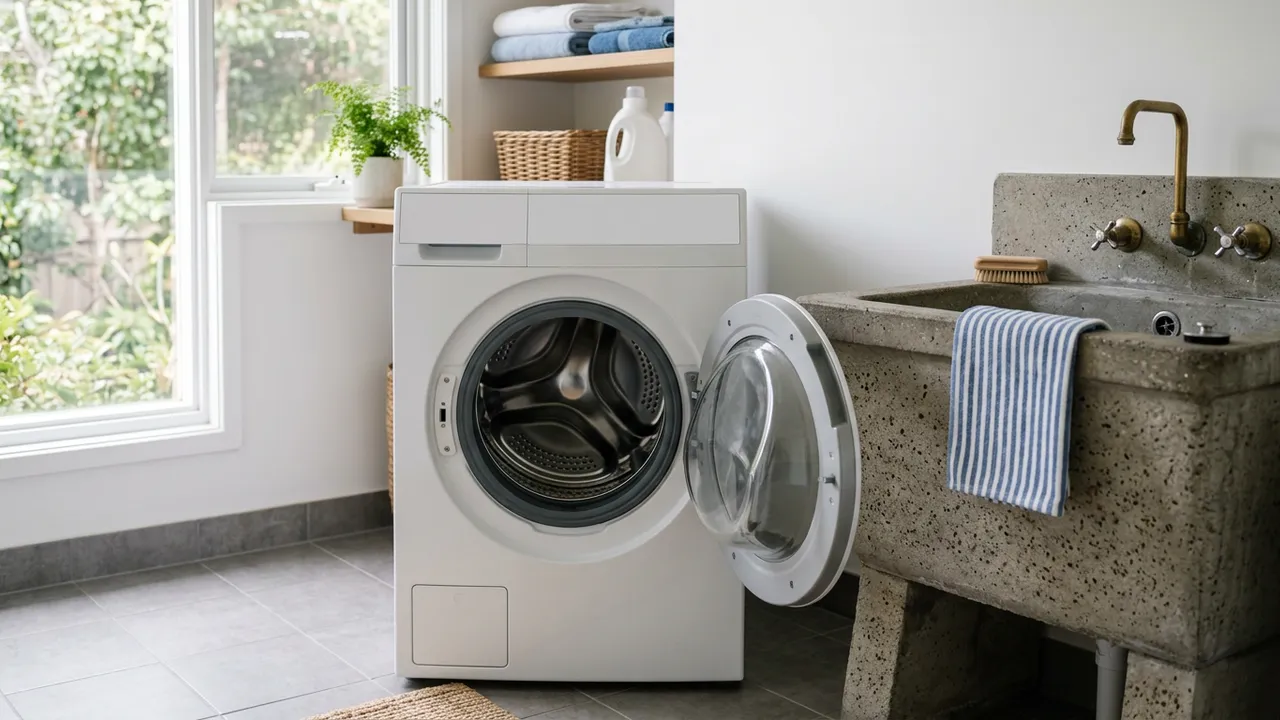
- Seal first. The folds of the rubber gasket hold water, hair and mould, so it needs a wipe with warm water and vinegar and a dry cloth.
- Then the drawer. Take it out, soak it in hot water and scrub the cavity behind it.
- Then the drum. Use the hottest cycle, or the tub clean setting if the machine has one.
- Check the filter. Most front loaders have a small drain filter behind a panel at the bottom front. Clearing it of lint and coins helps with a smell that returns after a clean, and our guide to a machine that will not drain or spin shows where to find it.
Why front-loaders smell
Front-loaders use far less water than top-loaders, which is great for your bills but means detergent and softener are not always fully rinsed away. That residue collects behind the rubber door seal, in the detergent drawer and inside the drum. Add the warm, damp environment of a closed door and you have the perfect conditions for mould and bacteria.
Clean the door seal (the usual culprit)
Peel back the rubber gasket around the door and have a look. You will often find water, hair, lint and black mould sitting in the folds. Wipe it out with a cloth and a mix of warm water and white vinegar, or a diluted bleach solution for stubborn mould. Get right into the creases, then dry it off.
Clean the detergent drawer
Pull the drawer out completely (most slide out with a small press on the release tab) and soak it in hot water. Scrub away the slimy build-up with an old toothbrush, and clean inside the cavity where the drawer sits, as mould loves it in there too.
Run a maintenance wash
With the drum empty, run the hottest, longest cycle your machine has. Add either a cup of white vinegar or a dedicated washing machine cleaner. Many newer machines have a "tub clean" or "drum clean" cycle built in, which is designed exactly for this. Do this monthly and the smell will not return.
Stop it coming back
- Leave the door and detergent drawer open between washes so the drum can dry out.
- Use the right amount of detergent, not more. Excess suds are what leave residue behind.
- Take washing out promptly rather than leaving it sitting wet in the drum.
- Wipe the seal dry every week or two.
When to call a professional
If you have deep-cleaned the machine and the smell persists, or you notice it draining slowly or leaving residue on clothes, the problem may be a blocked filter, a clogged drain hose or a build-up in parts you cannot reach. That is where we come in.
Wollongong Service Company services washing machines right across the Illawarra and South Coast, from Helensburgh to Kiama. If your machine needs more than a clean, get in touch or call us on 02 4229 3777.