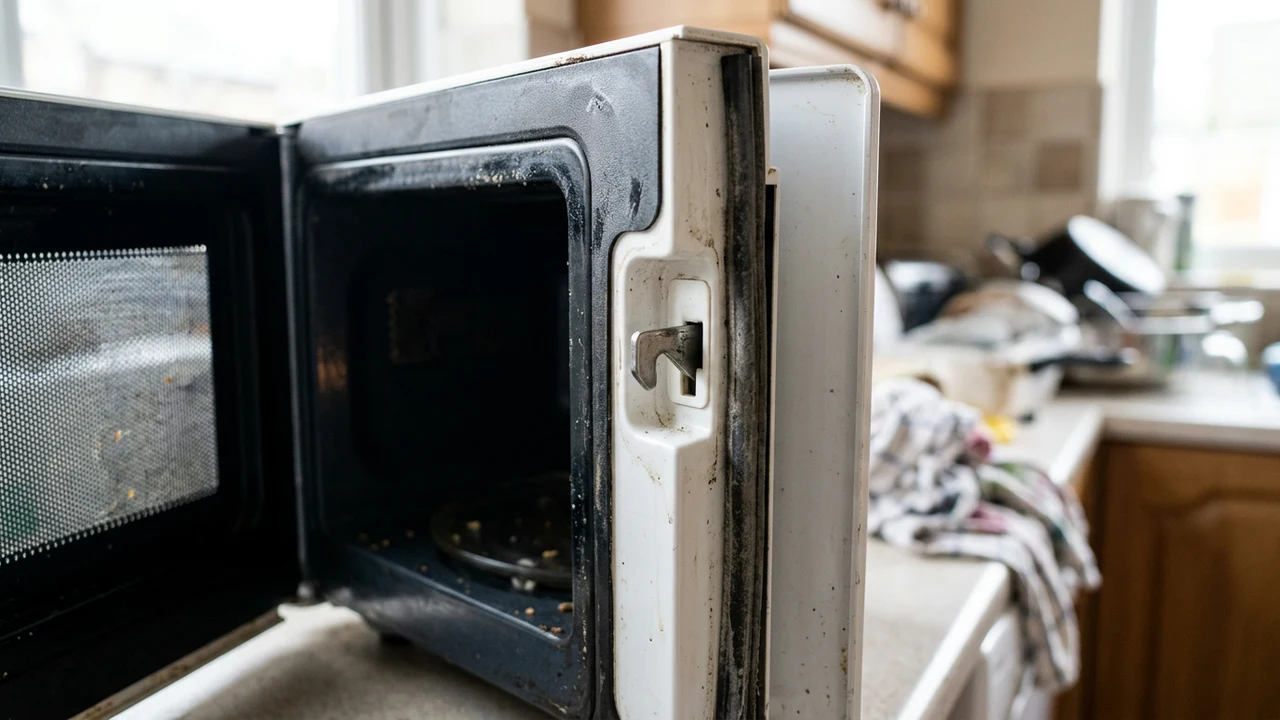
Microwave Sparking Inside? What That Arcing Is Actually Telling You
A bloke out at Corrimal rang me a couple of winters ago about a microwave that was, in his words, putting on a light show. Blue and orange flashes off the right-hand wall every time he reheated a plate, and afterwards a smell like burnt toast that had nothing to do with what he was eating. He had been living with it for about three weeks.
That is the bit worth saying up front. Arcing usually does not stop a microwave heating, which is exactly why people keep using one. Stop anyway.
What the flashing actually is
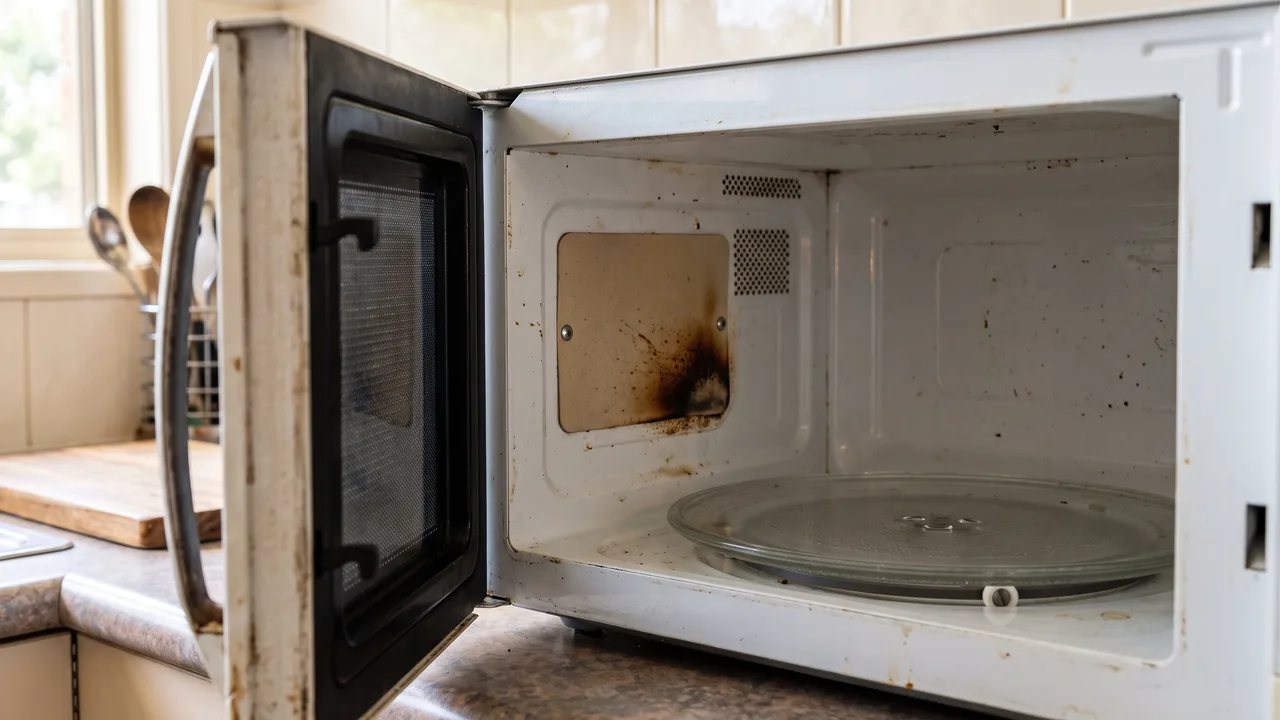
A microwave makes its energy in the magnetron and pipes it into the cavity through a channel called the waveguide. Where that channel opens into the oven there is a small panel covering the hole, usually a thin sheet of mica, and on most units it sits on the right-hand wall about halfway up. Beige, a bit like cardboard, held on with one or two tabs or a single screw.
That panel is the bit that arcs, nine times out of ten. Fat and steam get past it over the years, it goes dark, then it chars, and once it is carbonised it starts conducting instead of just sitting there. The flashes come off the burn.
His was black in one corner and had a hole through it the size of a five cent piece.
The other things it can be, in rough order
Baked-on splatter is the next one. Anything with sugar or fat in it that has cooked onto the roof or the walls will eventually carbonise the same way the cover does, and carbon in a microwave field sparks. Most of those clean off with a hot damp cloth and a bit of patience.
Metal is third, and it catches people who swear they never put metal in there. A takeaway container with a foil lid rim. The twist tie on a bread bag. A plate with a gold line around the edge, which is the classic. A fork left sitting on the plate under a serviette. None of that is a fault, it is just physics, and once you pull it out the arcing stops.
Then there is the cavity itself. Older microwaves have a painted steel interior, and when that paint chips or rusts through, usually along the floor or around the door frame, the bare steel arcs. That one is not really repairable. Paint touch-up kits exist and I would not bother with them on a benchtop unit.
Last, and much rarer, a rack or a turntable support with a bit of metal in the wrong place, or a stirrer cover in a unit that has one. Uncommon enough that I would check the other four first.
What you can safely do yourself
Unplug it. Then look at the waveguide cover with a torch, because in a dim kitchen a charred panel looks much the same as a clean one.
If it is only dirty, wipe it gently and leave it alone. It is a fragile bit of material and scrubbing it will take a layer off. If it is burnt through, cracked or missing entirely, do not run the microwave until it is replaced, and do not be tempted to run it with the cover off on the theory that there is now nothing to burn. The cover is there to stop steam and fat getting into the waveguide, and without it you are cooking the magnetron.
Clean the cavity properly while you are in there. A cup of water with a slice of lemon, run for a few minutes, softens most of what is baked on.
Then run it with a cup of water inside and watch. No flashes, you have found it. Still flashing, book it.
Point is, three of the five causes are yours to sort in ten minutes. That is a better hit rate than most appliance faults.
Where it stops being a home job
A microwave is the one appliance in the house I would tell anybody to stay out of, and I say that as somebody who opens them for a living. The high-voltage capacitor can hold a serious charge long after the thing is unplugged, and it does not care that you are being careful. There is a reason the repair videos all open with a warning.
So a waveguide cover is a part, and a technician fits it in a few minutes. A rusted-through cavity is usually the end of the unit. And if the arcing came with a bang and a burning smell and the microwave is now dead, that is a different conversation again, closer to a microwave that has stopped heating.
Worth a quick look at the product safety recalls register too if yours is a few years old, because a recalled appliance is often repaired or replaced free by the manufacturer and it costs you nothing to check the model.
Is the repair worth it?
Depends entirely on where it lives, not on the brand.
A benchtop microwave is cheap enough that a high-voltage fault usually is not worth paying to fix, and we will say so rather than take a fee to confirm it. A charred waveguide cover on the same unit, though, is a small part, and that one is normally worth doing.
Built-in, over-range and drawer microwaves are the other way round. They sit in a cabinetry cut-out and replacing one means matching the hole as well as buying the appliance, so almost any repair on them stacks up. That is where most of our microwave work is, and repairing versus replacing an appliance goes through how we weigh it up.
The Corrimal one was an over-range unit, for what it is worth. New cover, clean out, done on the visit.
If yours is flashing and a clean has not sorted it, we cover the Illawarra and South Coast. The assessment is $125 across the Illawarra and $145 further out, with the repair price before any work starts, and the rest of the fault list is on the microwave repair page. Book online or ring 02 4229 3777 with the make and model.