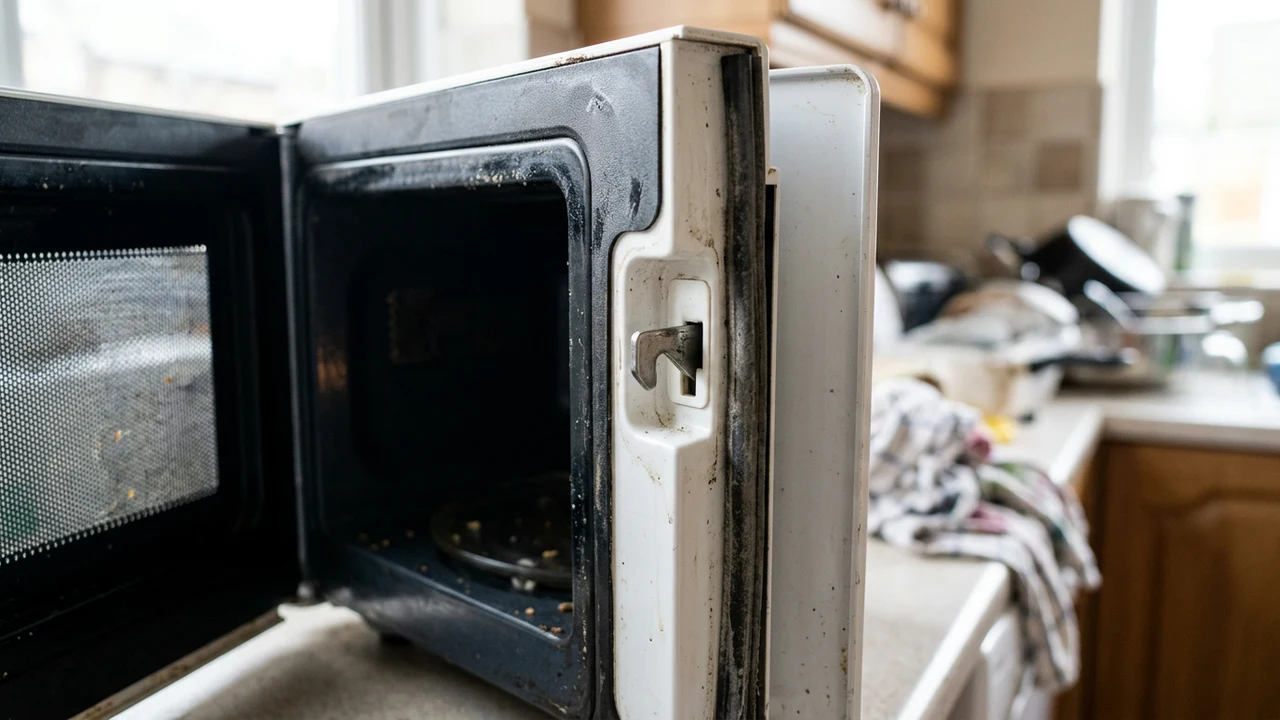
A microwave that gives you nothing at all, no display, no light, no beep, is a different fault to one that runs but does not heat. It is not a magnetron problem or a high-voltage fault. Something upstream of that has cut power to the whole unit, and the two most common causes are both small parts.
Rule out the power point first
Plug something else into the same socket the microwave is on, or plug the microwave into a different one. A dead powerpoint or a tripped circuit looks exactly like a dead microwave, and it is the check that costs nothing and rules out the most common non-fault in one go. If the microwave sits on a switched wall outlet, check the switch itself; those fail too.
The line fuse
Most microwaves carry a small glass or ceramic fuse on the low-voltage side, separate from the high-voltage fuse that protects the magnetron circuit. It is there to protect the control board and the display from a surge or a fault elsewhere in the unit, and when it blows, everything downstream of it goes dark at once. A power surge, the kind that follows a blackout when the grid comes back up rough, is a common way to lose one. If your microwave died the same day as a storm or an outage, appliance damage after a blackout covers what else in the house is worth checking.
A blown line fuse is a cheap part and a straightforward repair. It is not something to test or replace with the unit open and plugged in; the case comes off and there is a high-voltage capacitor in there that holds a charge long after the power is off, which is the reason we say leave the inside of a microwave to someone with the gear for it.
The door interlock switches
Most microwaves run three separate switches on the door, wired so the unit will not run, and in some designs will not even power up its display, unless all three agree the door is fully shut. The switches are there to stop microwave energy leaking out through a door that is not sealed properly, and manufacturers fit more than one so a single switch failing does not remove the safety margin.
Grime is the everyday cause. A bit of built-up food residue or grease on the latch or the strike plate stops the door seating fully, even though it looks closed, and the switches never see a confirmed shut door. Wipe the latch and the frame it closes against and try it again before assuming a switch has failed.
Past that, it is wear. The switches themselves take a beating over years of the door being pushed shut with an elbow or a hip, and one that has started sticking or failing intermittently is usually close to failing outright. A microwave that has started needing "a bit of a slam" to start is worth booking before it stops working altogether.
What to try before you book
- Test the powerpoint with a different appliance, or the microwave in a different socket.
- Wipe the door latch and the frame it seats against, then try again.
- Listen and look for any response at all, even a faint click, when you press start. That points at the switches rather than the fuse.
- Do not open the case. The capacitor inside holds a dangerous charge even unplugged.
When it's a job for us
A blown line fuse or a failed door interlock switch are both quick, inexpensive repairs on a benchtop, over-range or built-in unit, which puts this fault in a different category to a high-voltage failure. On a built-in or over-range microwave sitting in a cabinetry cut-out, it is almost always worth fixing regardless, since the replacement has to match the existing space. On a benchtop model it is one of the cheaper faults to have, precisely because the parts are small and the labour is quick.
The assessment is $125 across the Illawarra and $145 for the far South Coast, and covers a technician diagnosing the fault and quoting before any repair goes ahead. If yours runs but stays cold rather than staying dark, that is a different fault with a different write-up: microwave runs but the food's still cold. If it flashes or sparks inside instead of failing to start, see microwave sparking inside. Full fault list and FAQs are on the microwave repair page, and it is worth a look at the product safety recalls register if the unit is a few years old.
Book online or call 02 4229 3777 with the make, model and what it did (or did not do) when you pressed start.