Why Your Dishwasher Isn't Cleaning Dishes Properly
Written by Jozo, Lead technician
Updated
A dishwasher that sends dishes out cloudy, gritty or still dirty is doing a lot of running for very little result. Before you write it off, it is worth knowing that poor cleaning is far more often a maintenance or loading issue than a serious fault. Here is how to get it washing properly again.
Why is my dishwasher not cleaning properly?
A dishwasher that is not cleaning properly is most often held back by a clogged filter, blocked spray arm holes or crowded racks, and all three can be checked in a few minutes with the machine switched off at the wall. Food in the filter sends dirty water back over the load, scale or seeds in the spray arm holes stop water reaching the top rack, and a tall item can stop an arm turning or hold the detergent flap shut.
If the filter is clear, the arms spin freely and the racks are not packed, but dishes still come out dirty, the fault is usually the wash pump, the heating element or the water inlet, and that needs a technician.
Clean the filter
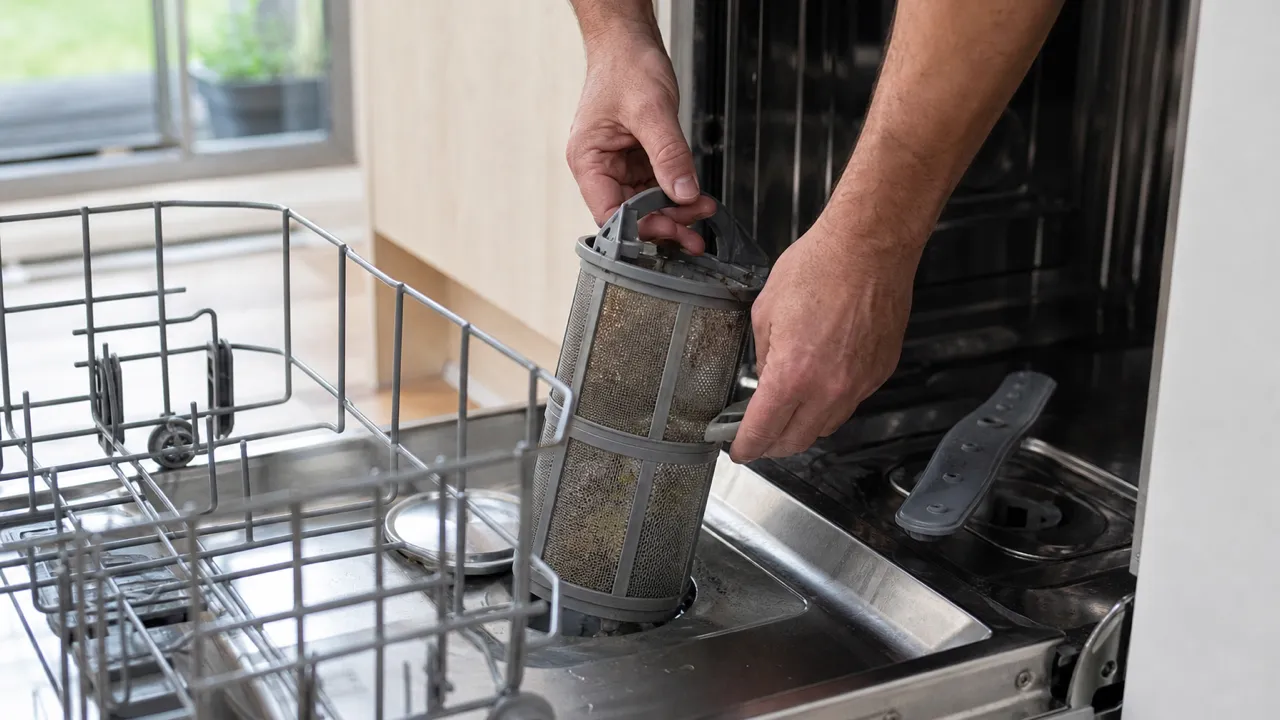
The filter in the base traps food so it does not redeposit on your dishes. When it clogs, dirty water recirculates and everything comes out worse than it went in. Remove it, rinse it under the tap, and scrub the mesh. Doing this every couple of weeks makes a noticeable difference.
Check the spray arms
The spray arms have small holes that jet water over the dishes. Bits of food, seeds and hard-water scale block those holes over time. Take the arms off (most just unclip or unscrew) and poke the holes clear with a toothpick, then rinse. Make sure the arms spin freely, as a tall item can catch and stop them turning.
Do not over-rinse, but do scrape
Scrape plates before loading, but you do not need to pre-rinse them spotless. Modern detergents actually need some food residue to work against. What matters more is not blocking the spray arms with large items.
Load it properly
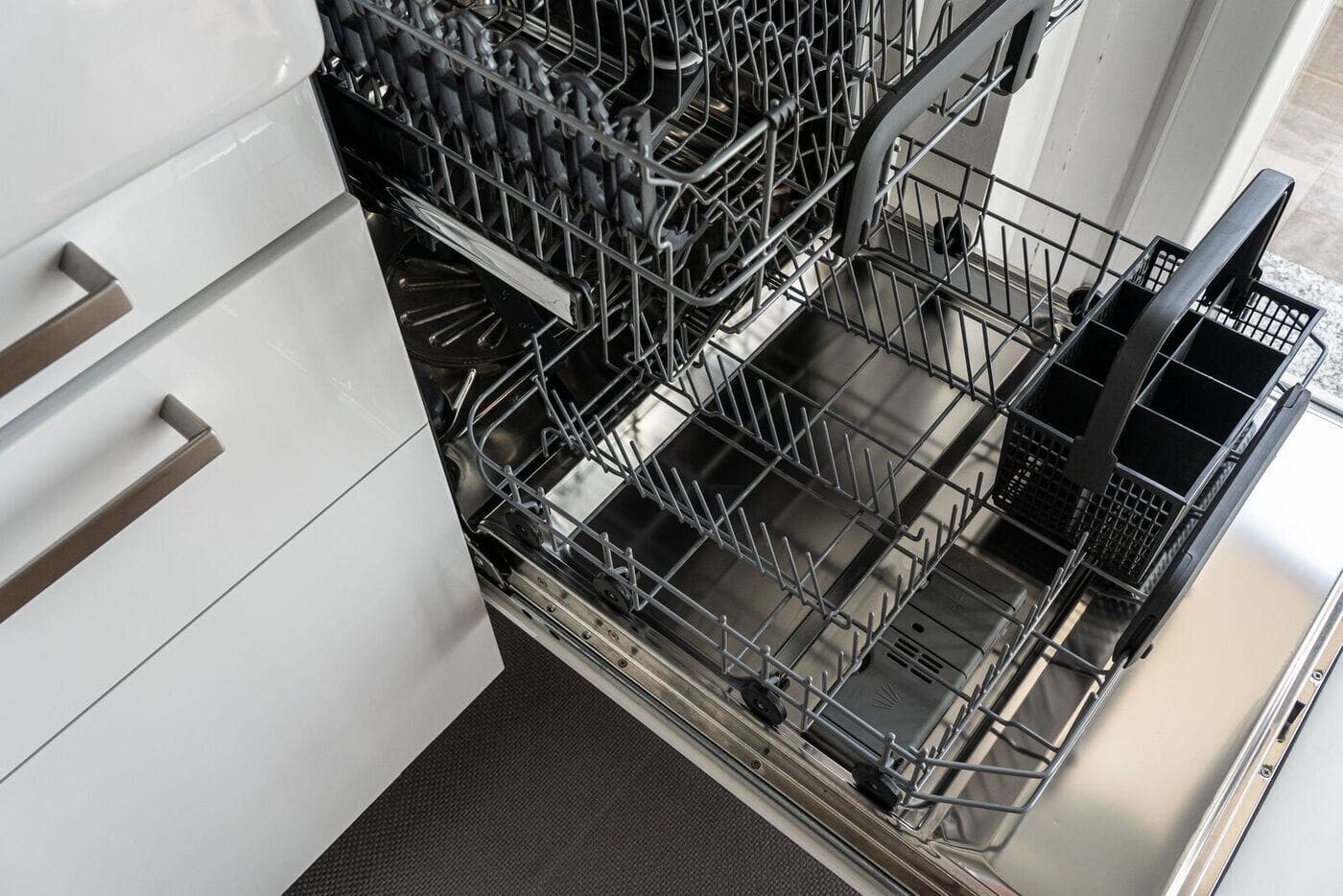
Overloading is a top cause of poor results. Water and detergent need to reach every surface, so do not nest bowls together or crowd the racks. Face dirty surfaces toward the centre where the spray is strongest.
Check your detergent and rinse aid
Old or damp detergent loses its punch. Make sure the dispenser flap opens during the cycle and is not blocked by a tall item. Add rinse aid if you are getting spots and film, which is common in the harder water areas around the Illawarra.
Run a hot maintenance wash
Every month or so, run an empty hot cycle with a dishwasher cleaner to clear grease and scale from the internals. This keeps the spray arms and pump working as they should.
Test the machine with a plain load
If you cannot tell whether the machine or the way you use it is at fault, strip the variables out. Load only plates and bowls, with nothing nested and nothing tall in the way, and put in one tablet in the right compartment. Run the normal cycle. If that load comes out clean, the machine is fine and the earlier results came from loading, a dose that was too low or a cycle that was too short for the soil. If it still comes out dirty, you can stop blaming the habits and look at the machine.
Why the top rack and the bottom rack fail differently
Where the dirt stays tells you something. If only the top rack is poor, water is not reaching the upper spray arm, which usually means a blocked arm, a loose arm or a weak pump. If only the lower rack is poor, large items are probably blocking the lower arm or shielding the load. If both racks are poor and the water in the tub looks grey and gritty, the filter is the first suspect. If dishes are clean but cold to the touch and greasy at the end of a cycle, think about the water temperature rather than the spray.
Does the detergent type matter?
Quite a lot. In CHOICE's most recent dishwasher detergent testing, tablets scored between 57 and 80 per cent while powders scored between 32 and 63 per cent. We go through those results in our guide to tablets, powder and gel and in our post on powder or liquid detergent. Before you pay for a technician, run the plain load above with a good tablet. A machine that was never at fault will often come right on a product swap.
What a technician checks when the basics are clear
When the filter, arms, load and detergent are all sorted, we work through the parts that move and heat the water. We check that the wash pump builds proper pressure, that the heating element warms the water through the cycle, and that the inlet valve lets in a full fill. A short fill or a cold wash leaves the same dirty dishes as a blocked arm, so each is tested rather than guessed.
The assessment is $125 in the Illawarra and $145 further out on the South Coast. If a part is needed you get a quote before any work begins, and the workmanship carries our three month guarantee. Our dishwasher repair page lists the common faults, and if the cause turns out to be a machine that holds water, our guide to a dishwasher that will not drain is the next read.
When to call a professional
If the filter and spray arms are clean, the machine is loaded well, and dishes still come out dirty, the problem may be the wash pump, heating element or water inlet not delivering enough hot water. Those need a technician.
Wollongong Service Company services dishwashers across the Illawarra and South Coast. Book a repair or call 02 4229 3777.