Dishwasher Not Draining? Common Causes and How to Fix It
Written by Jozo, Lead technician
Updated
Opening the dishwasher to find a pool of dirty water in the bottom is frustrating, but it rarely means the machine is beyond saving. In most cases something is stopping the water from getting out, and the fix is more straightforward than you might expect. Work through these checks in order before you assume the worst.
Why won't my dishwasher drain?
A dishwasher that will not drain is most often blocked at the filter, the drain hose or the sink connection, and each of those can be checked without tools. A clogged filter traps water in the base, a kinked hose behind the machine stops it leaving, and a blocked sink trap or an unremoved knockout plug at a waste disposal inlet stops it going anywhere once it does.
If all three are clear and water still sits in the bottom after a rinse cycle, the drain pump is the likely fault, and that needs a technician.
Check the filter first
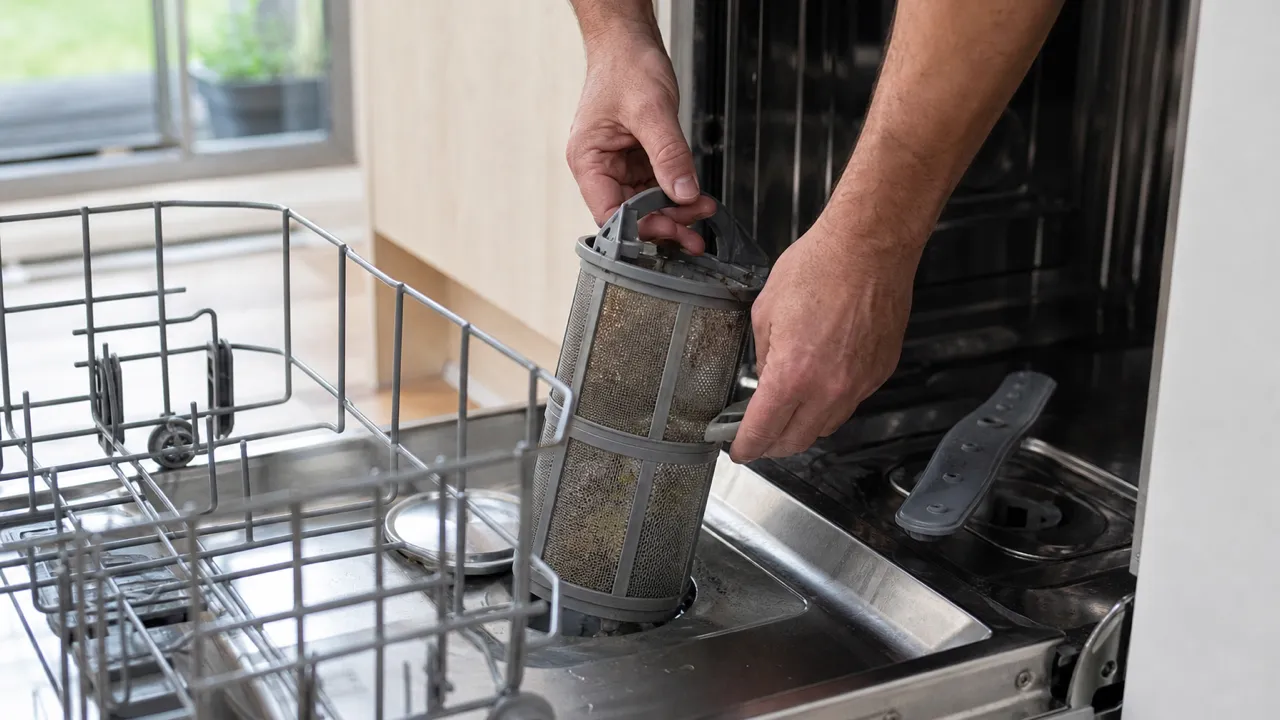
The filter sits in the base of the dishwasher, usually under the bottom spray arm, and it catches food scraps so they do not recirculate. Over time it clogs. Twist it out, rinse it under the tap, and clear any debris from the housing underneath. On a lot of the machines we see, this alone solves the problem.
Clear the drain and food trap
While you are down there, scoop out any standing water with a cup and sponge, then check the sump area for glass, bones, labels off jars or anything else that could block the outlet. Small hard objects are a very common cause of a dishwasher that will not drain.
Inspect the drain hose
The drain hose runs from the dishwasher to your kitchen waste or sink trap. Check that it is not kinked behind the machine, and that the connection point at the sink is not blocked. If your dishwasher shares a drain with the sink, a blocked sink can back water straight into the dishwasher.
Check the garbage disposal or sink connection
If you have a waste disposal unit, run it, as a blockage there can stop the dishwasher draining. New installations sometimes leave a knockout plug in place at the disposal inlet, which will stop drainage entirely.
Run a rinse cycle
Once you have cleared the filter and hose, run a short rinse cycle and watch whether the water drains away. If it does, you are done.
Is the water you can see actually a fault?
A small amount of water in the base is normal. Most dishwashers keep a little water in the sump between cycles, and a shallow film under the filter does not mean the drain has failed. The sign of a real problem is water that sits above the filter, a tub that is still wet and murky when the cycle ends, or a machine that stops partway through and will not finish. If you have opened the door mid-cycle, close it and let the cycle end before you decide anything.
Look at the display before you pull anything apart
If the machine has a display, it is often telling you where to look. Bosch lists E18 as a drainage fault, meaning the machine did not see water leave in the expected time, and the usual order is the filter, then the pump impeller beneath it, then the hose at the sink trap. Our Bosch dishwasher error code guide and the Bosch brand page explain each code. Other brands use different codes, so check the manual for your model number rather than assuming the Bosch meaning applies.
What not to do
Do not pour drain cleaner into the tub. It will not reach a pump or hose fault, and it leaves a harsh chemical sitting in a machine that you will put dishes into. Do not run cycle after cycle hoping it clears, because every cycle adds more water to a tub that cannot empty, and a full tub can overflow onto the kitchen floor. Do not push a wire or screwdriver into the pump housing, which can crack the impeller or the housing and turn a small repair into a larger one.
Why the problem comes back
A drain that clears and then blocks again within a few weeks usually means the cause is still there. Scrape plates properly, because grease and soft food are what build a mat over the filter. Rinse the filter once a month. If the blockage returns even though you do this, the hose, the pump or a restricted waste connection is the more likely cause, and that is worth a technician's time rather than another round of cleaning.
What a drain repair involves with us
A technician will test the drain pump, check the hose and the connection, and read any stored fault code before anything is replaced. The assessment is $125 in the Illawarra and $145 further out on the South Coast, and the repair is quoted before work starts. Our terms say a quote is valid for 14 days and that workmanship carries a three month guarantee.
It helps if the machine is somewhere we can work on it without risk to the floor or cabinets. Pulling it out to a clear spot before we arrive saves time. Our dishwasher repair page lists the common faults, and we also cover why dishes stay dirty if drainage turns out to be fine.
When it is the pump
If the water still will not go, the drain pump itself may be faulty or jammed, or the machine may be throwing a fault code. Pumps and control boards are not a DIY job, and getting into them the wrong way can cause leaks or electrical faults.
If you have worked through the checks above and your dishwasher still holds water, book a repair with Wollongong Service Company or call 02 4229 3777. We repair all major brands across the Illawarra and can usually tell you what is wrong on the spot.