Is your fridge door seal shot? How to check, and when to replace it
Written by Jozo, Lead technician
Updated

A fair few of our fridge calls come down to the one part nobody thinks about, the rubber seal around the door. The fridge is running flat out, there is sweat or a bit of ice where there should not be, and the milk on the door shelf is not as cold as it used to be. Nine times out of ten the compressor is fine. The door has just stopped shutting tight.
Here is how to tell, and whether it is worth doing anything about.
What the seal actually does
That flexible gasket running around the edge of the door is the only thing holding the cold in and keeping the warm kitchen air out. Most of them have a magnetic strip inside, so the door pulls itself shut over the last centimetre. Over ten or fifteen years the rubber hardens, the corners tear and the magnetism fades. Once that happens, warm air leaks in around the clock and the fridge answers the only way it can, by running longer and more often to hold temperature.
That is why a gone seal turns up on the power bill. A fridge is on every hour of every day, so a small constant leak adds up more than you would think. If yours is old and running non-stop, the government's energy running-cost comparison for fridges and freezers is a sobering read.
The paper test
You do not need a technician to check the seal. You need a sheet of paper.
Shut the door on the paper so half is inside and half is out, then pull it back. There should be a bit of drag. Do it at the top, down both sides and along the bottom, because a seal often lets go in just one spot, usually a bottom corner. If the paper slides free with no resistance anywhere, the seal has lost its grip. A five-dollar note works just as well if there is no paper handy.
While you are there, run a finger around the rubber. Splits, flat spots that have taken a set, and black mould worked into the folds are all signs it is near the end. A wipe with warm soapy water sometimes revives a seal that is just grimy and stiff, so try that before you write it off.
Signs it is the seal and not something worse
A few faults look like a seal problem but are not.
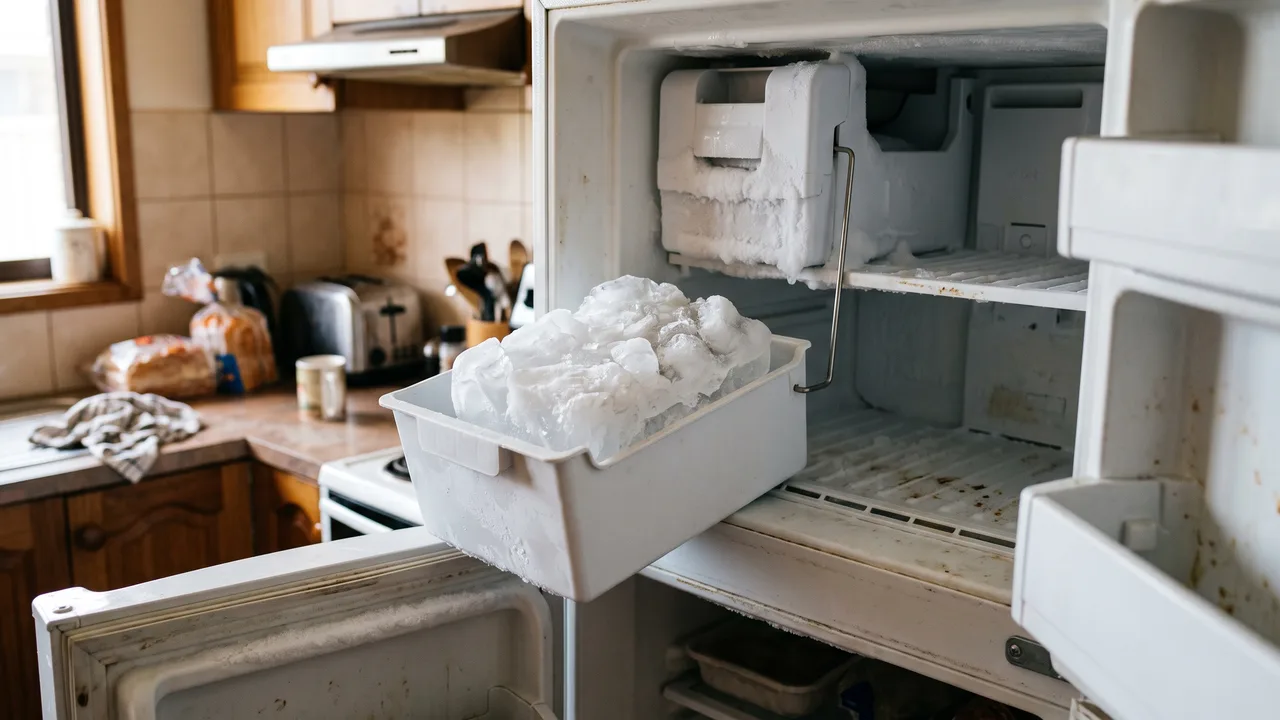
Water pooling under the crisper or dribbling out the bottom is more often a blocked defrost drain than a leaking door. A fridge that has gone warm while the freezer stays frozen is usually an airflow or defrost fault, not the seal, and we wrote that one up in why the fridge is warm but the freezer still works. Condensation and a little ice buildup right at the door edge, though, on a fridge that runs and runs, points straight back at the gasket.
Can you replace it yourself?
Sometimes, yes. On a lot of fridges the seal is held in by a press-in channel or a row of screws behind the lip. You order the exact gasket for your model and clip the old one out. Sit the new seal in warm water first so it goes soft and pliable, and it beds in far easier.
Two catches. The seal has to be model-specific, and getting the right part for older or imported fridges can be the hard bit. And on some designs the gasket is bonded, or the door has to come off its hinges to reach it, which is more of a job than it looks. If the seal fights you, or the door needs to come apart, that is worth a call rather than a wrecked door.
When it is worth doing
A new seal on a fridge that is otherwise healthy is money well spent. It drops the running cost straight away, and there is no sense replacing a good fridge over a strip of rubber. On a fridge that is already fifteen years old, tired and noisy, it is one more sign the whole unit is near the end, and our guide to repair versus replacement helps you weigh that up. If the fridge is only a few years old and already struggling, it is also worth checking your consumer guarantee rights before you spend, because they can apply well past the warranty.
If you would rather we sorted it, we fit door seals on fridges and freezers across the Illawarra and South Coast, every major brand, and we can tell you on the spot whether the seal is the whole story or only part of it. The assessment fee is $125 across the Illawarra and $145 further out on the South Coast, with a quote before any work starts. Book a repair or call 02 4229 3777.