Oven Not Heating Up? Common Faults and Fixes
Written by Jozo, Lead technician
Updated
An oven that will not heat, or that cooks unevenly and never quite gets there, throws the whole kitchen out. The cause depends a lot on whether you have an electric or gas oven, so start there. A quick warning up front: gas and mains electricity are involved, so some of these checks are for diagnosis only, not DIY repair.
Why is my oven not heating up?
An oven that will not heat up has nearly always lost one of four things: an element on an electric oven, the igniter on a gas oven, the thermostat or temperature sensor, or a clock and timer setting that is stopping the bake cycle from starting.
The quickest way to narrow it is to notice what still works. If the light, fan and display all come on but nothing gets hot, power is reaching the oven and the fault is on the heating side, which means the element or thermostat on electric and the igniter on gas. If the oven is completely dead, check the circuit breaker and the isolating switch on the wall first. If the clock is flashing after a power cut, set it, because many ovens refuse to start a bake cycle until the time of day is set.
Oven not heating up but the fan is working
If the oven light and fan run but the cavity stays cold, the element has usually failed on an electric oven, and the igniter has usually failed on a gas one.
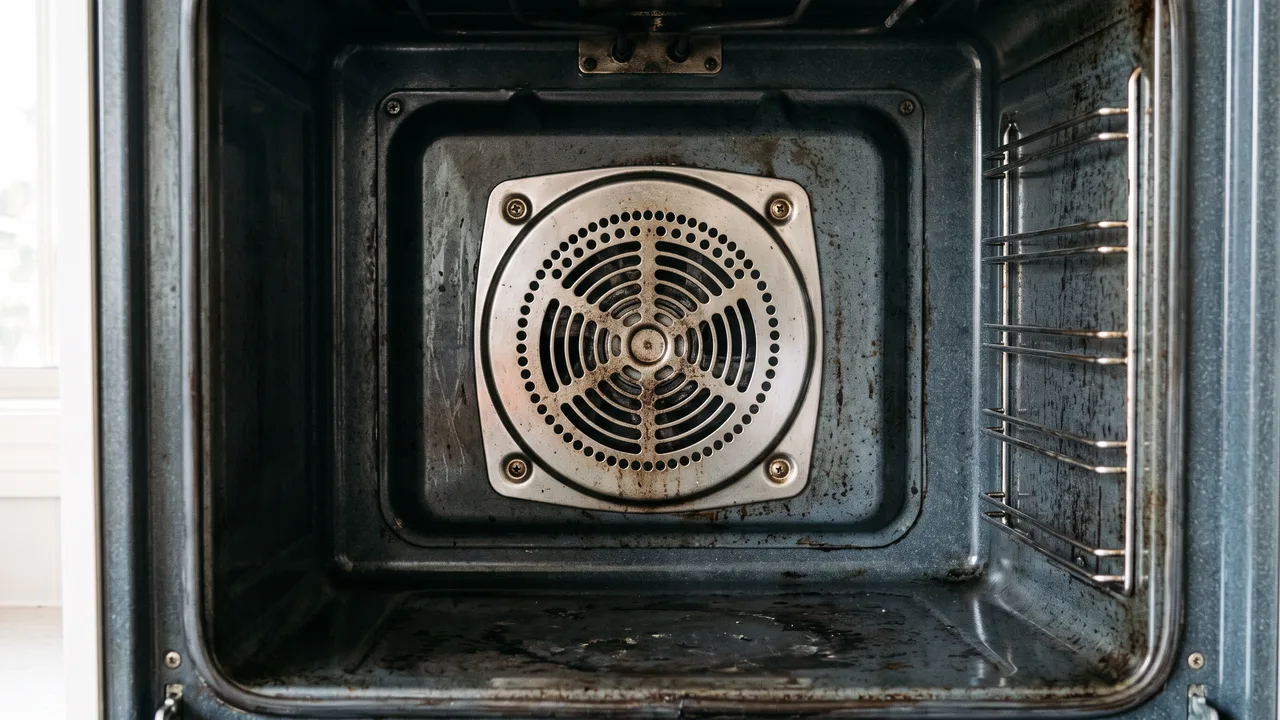
On an electric oven, look at the bake element on the floor of the oven with everything cold and off. A blister, a split or a bright burnt patch means it has gone, and if the grill still works that confirms it, because the grill runs on its own element. On a fan-forced setting the element is a ring behind the back panel, so you cannot see it, but fan-forced cold with conventional bake working points at it just the same. A gas oven that clicks or hisses and never lights has a weak igniter, and that is not one to attempt yourself.
Neither of these means a new oven. Elements and igniters are routine parts, and the oven repair page covers what a visit involves.
Electric ovens: check the elements
Most electric ovens have a bake element at the bottom and a grill element at the top. When an element fails, it often shows visible damage: blistering, a bright spot, or a break in the coil. If the element does not glow red when the oven is on, it has likely burnt out. Elements are a common failure and a routine replacement for a technician.
Check whether the grill works but the oven does not
If the grill heats but the oven does not (or the other way around), that points to a single failed element or its wiring rather than a power problem. It is a useful clue to mention when you book a repair.
Gas ovens: the igniter
In a gas oven that will not heat, the igniter is the usual suspect. A weak or failed igniter will not get hot enough to open the gas valve, so the oven never lights. You should never attempt to work on gas components yourself. If you can smell gas, turn it off at the gas supply, ventilate, and call for help.
Check the thermostat and temperature
If the oven heats but runs too hot or too cold, or will not hold a steady temperature, the thermostat or temperature sensor is often the cause. An oven thermometer sitting on the shelf will quickly tell you how far off it is.
Check the clock and controls
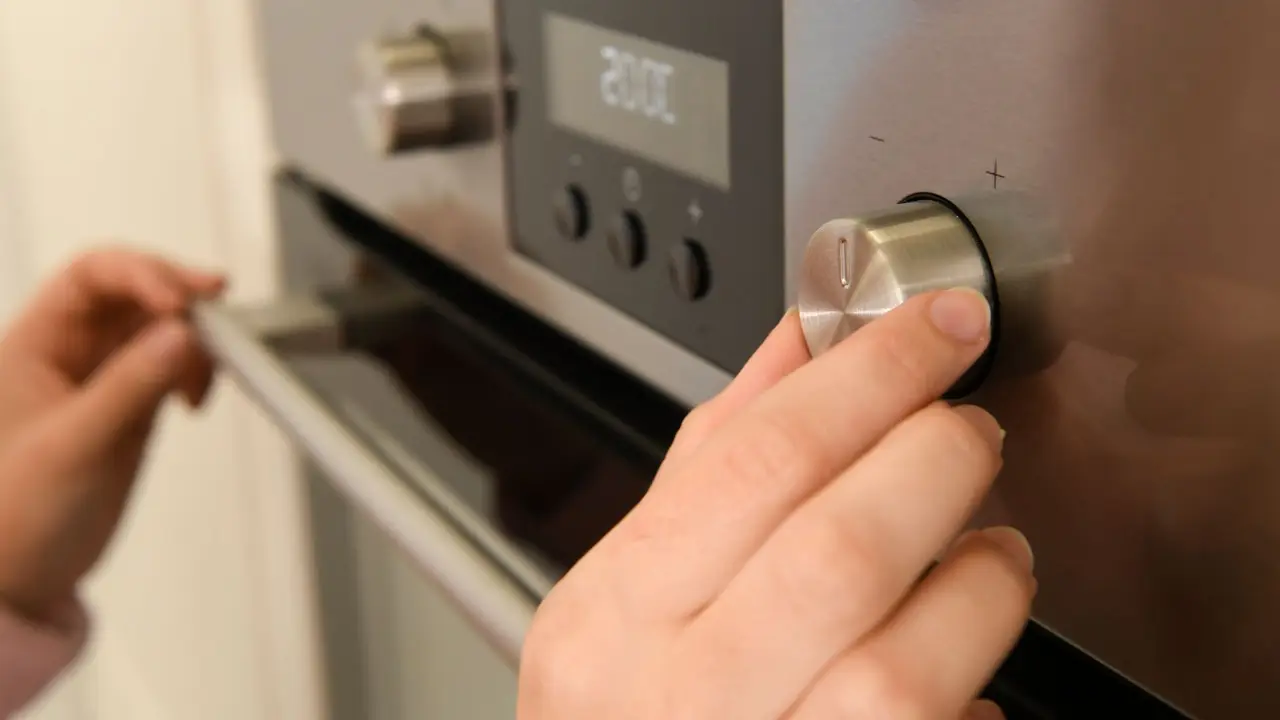
Some ovens will not start a bake cycle if the timer or clock is set to "auto" or a delayed start. Check the display is in manual mode. It sounds simple, but it catches people out, especially after a power outage resets the clock.
What a technician checks, in order
When we attend an oven that will not heat, the order is the same each time, and knowing it helps you describe the fault. First, supply: is the oven getting power, and is the voltage reaching its terminals. Second, controls: does the selector or the board call for heat when a temperature is set. Third, the heating parts: element continuity on electric, igniter draw and valve opening on gas. Fourth, safety devices: a thermal fuse or limiter that has opened will stop the heat even when everything else is fine. Last, the temperature sensor, which can fail in a way that makes the oven shut the heat off early.
That is why details help. "The display works, the fan runs, the grill heats but the bake does not" tells us straight away that the supply is fine and the bake element or its connection is the suspect. "It heated for ten minutes and then switched off" suggests a sensor or a limiter. "It does nothing at all" sends us to the supply.
A worked example: the oven that never reaches 180
A common complaint is the oven that takes forever and never gets to the temperature on the dial. Try this. Put an oven thermometer on the middle shelf, set the oven to 180 degrees on conventional bake and leave it for 20 minutes. If the thermometer reads close to 180, the oven is fine and the recipe or the shelf position is the issue. If it reads well under, say 140, the oven is underperforming: a weakened element, a drifting sensor or a worn door seal letting heat escape. Check the seal by looking for gaps, tears or hard, flattened rubber around the door. Our guide to oven door seals and thermostats shows what to look for.
If the reading is higher than the dial, the thermostat or sensor is reading cold and overshooting, which burns food just as surely. Write down the dial setting and the thermometer reading and tell us both when you book.
Cost, timing and what we will tell you
The assessment is $125 across the Illawarra and $145 further out on the South Coast. It covers the technician attending and diagnosing the fault, and the service call includes minor repairs that need no replacement parts. If parts are needed you are quoted before any work begins, and that quote is valid for 14 days. Our repairs carry a 3-month guarantee on workmanship. We are authorised for 16 brands, including Westinghouse, Bosch and Smeg, so warranty ovens are covered as well.
If your oven is old and the quote is large, say so and ask for an honest view. Our post on repairing versus replacing an appliance covers how we weigh age, parts and price, and sometimes the answer is to buy a new oven.
When to call a professional
Elements, igniters, thermostats, sensors and control boards all need proper testing and, in the case of gas, a licensed technician. It is not worth the risk of working on them yourself.
Wollongong Service Company repairs electric and gas ovens across the Illawarra and South Coast. Our oven repairs in Wollongong page sets out the common oven faults. Book a repair or call 02 4229 3777.