The ice maker nobody had turned on
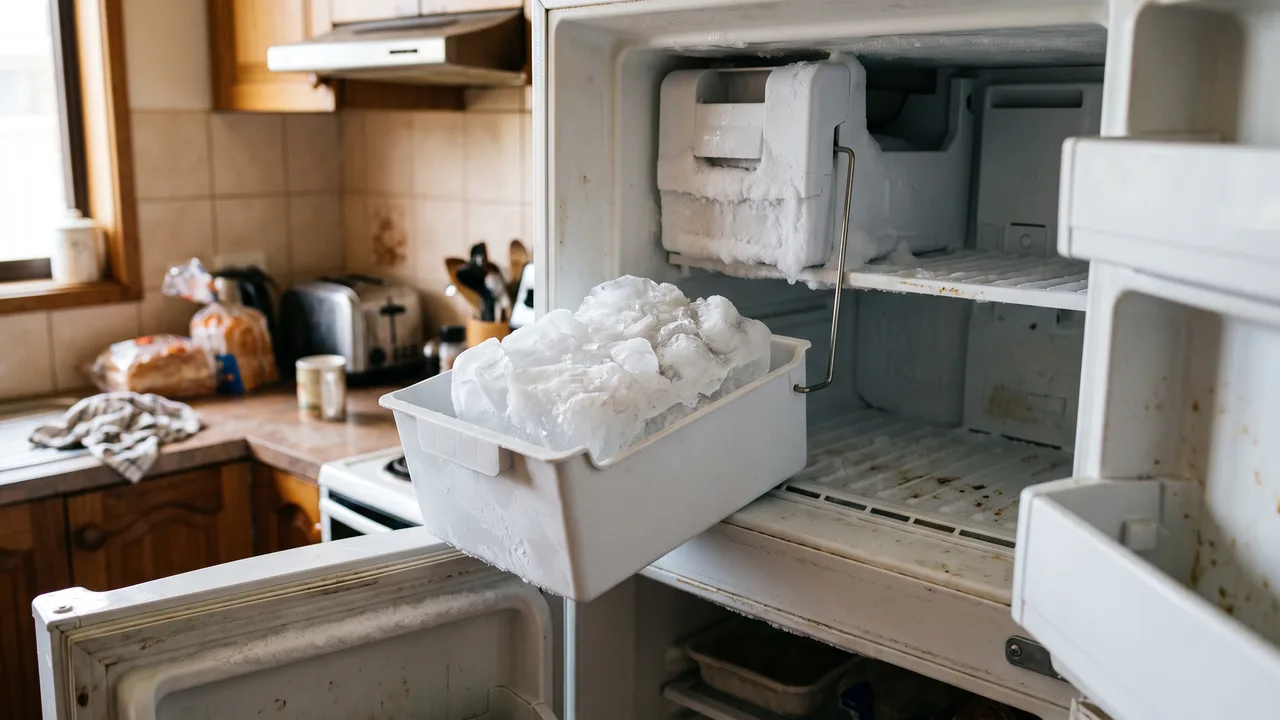
A woman in Figtree paid an assessment fee to find out her ice maker was switched off. Not broken. Off. There is a little wire arm inside the ice bin on that model, and when it sits up the machine stops making ice, which is exactly what it is supposed to do when the bin is full. Somebody had shoved a bag of frozen peas in there and lifted the arm on the way past, and it had been up for about eight months.
I felt bad taking the money. She was good about it, and she has never had to ring me since, so call it even.
Ice makers are like that. They are the least understood thing in the kitchen, they sit inside a freezer where nobody looks, and the failure people describe on the phone as "the ice maker is dead" is a supply problem, a temperature problem or a switch problem far more often than a dead ice maker.
Start with the two switches nobody knows about
Before anything else, find out whether the machine has been told to stop.
Older ice makers have that wire feeler arm hanging down inside the bin. Down means make ice, up means stop. It gets knocked up by a hand reaching past, by an overfull bin, or by a bag of something wedged in beside it. Push it down and give the machine a day.
Newer fridges use an infrared beam across the bin instead of an arm, and that has the same failure in a different costume. A single ice cube stuck to the side of the bin, a smear of frost over the little window, or a container sitting where the bin should be, and the fridge decides the bin is full and quietly stops. Pull the bin right out, empty it, wipe both sides of the housing dry, and put it back square.
There is usually also an on-off switch or a menu item, and on a lot of Samsung and LG models it is buried in the display panel where a grandchild can find it and you cannot. If your ice maker "just stopped" the week the family visited, start there.
No ice, and the switches are fine
Now it is worth a proper look, and there are only a few candidates.
The freezer is not cold enough. This one catches people. An ice maker does not run on a timer, it runs on temperature. The mould has to get down to its harvest point before the machine will twist the cubes out, and if the freezer is sitting at about minus twelve instead of minus eighteen, it never gets there. The fridge looks fine. The food is frozen. No ice. It happens most often after somebody turns the dial down to save on power, or after the freezer has been packed so full that air cannot move around inside it. Put a thermometer in there overnight before you assume anything mechanical.
The fill tube has frozen into a plug. Water reaches the ice maker through a thin tube that pokes into the back wall of the freezer, and if a fill has ever overshot or dribbled, that tube can ice up solid. Then nothing gets through and the machine cycles away making nothing. You can usually see it: a lump of ice at the back of the ice maker where the tube enters. A hair dryer on low, held well back, or a cloth soaked in warm water held against it for a few minutes, will clear it. What you should not do is chip at it with anything metal, because that tube is soft plastic and there are lines behind that wall you do not want to meet.
If it refreezes within a fortnight, it is not really a fill tube fault. Something is letting the fill run on, and that is the inlet valve.
The water inlet valve. Down the back at the bottom of the fridge there is a solenoid valve where the house water connects. It has a fine mesh screen in the inlet that silts up, and the solenoid itself fails. The tell is sound: stand there when the ice maker calls for water and listen. A buzz or a hum with no water arriving is a valve that is being asked and cannot deliver. Silence usually means the ice maker is not asking at all, which sends you back to temperature or to the ice maker's own control.
The dispenser has gone from a stream to a dribble
Different complaint, mostly different causes, and this is the one people put up with for years.
Nine times out of ten it is the filter. They are meant to be changed roughly every six months, and the interval is about water volume rather than the calendar, so a big household gets there sooner. A filter that is overdue does not stop the water, it strangles it, and because it happens gradually nobody notices until the glass takes half a minute. If you cannot remember changing it, that is your answer.
Two things go wrong with filter changes, though, and I see both.
The first is air. A new filter leaves the system full of air, and the dispenser will spit, dribble, then stop. Run four or five litres straight through into a jug and it settles down. Chuck that water and the first bin of ice with it, because it carries carbon dust from the new cartridge.
The second is the aftermarket cartridge that does not quite seat. Generic filters are fine when they fit properly and a false economy when they do not, and a cartridge that has not clicked home either restricts the flow or weeps quietly into the cabinet. If the dribble started the day the new filter went in, take it out and try the old one for an hour. That tells you everything.
Past the filter, look at the line itself. The supply is thin plastic tubing running to a tap under the sink or behind the fridge, and it gets crushed flat when the fridge is pushed back against the wall after a clean. Pull the fridge out and follow it. Half-closed isolation taps are the other one, usually closed by whoever was last under there doing something else.
Water on the floor, which is the one to take seriously
If there is a puddle, work out which side of the tap it is coming from, because that decides who you ring.
The valve, the internal lines and the dispenser assembly are inside the appliance and they are ours. A split in the supply line, a weeping compression fitting, or anything on the house side of the isolation tap is plumbing work, and in NSW you need the right licence to do plumbing and drainage work, so that is a licensed plumber rather than a Saturday afternoon.
Worth knowing that a slow leak from a push-fit fitting will travel. It runs along the floor under the kickboards and surfaces a metre or two away, which is why people spend weeks convinced the dishwasher is at fault. If the water is inside the fridge rather than under it, that is a different animal altogether and water pooling under the crisper covers where to look.
Ice that tastes off, or has welded itself into a brick
Ice absorbs whatever is in the freezer with it. If the bin has been sitting there since Easter, the ice will taste like the freezer, and no repair fixes that. Tip it out, wash the bin in warm water, dry it properly and let the machine make a fresh lot.
A solid block instead of loose cubes usually means the ice is partly melting and refreezing. Either the freezer is running warm, or the flap on the dispenser chute is not sealing and warm kitchen air is being drawn up it, or the household simply is not using enough ice for it to turn over. Have a look at the flap gasket while you are there. They perish, and a perished one costs you ice, frost on the door liner and money on the power bill at the same time.
What is worth calling us for
Roughly, the split goes like this. The feeler arm, the sensor window, the filter, the fill tube, the supply line and the freezer temperature are all yours, and between them they account for most of what I get called out to.
Book it when the inlet valve is buzzing without filling, when the fill tube refreezes after you have cleared it, when the ice maker's own motor or thermostat has failed and it sits there full of water it will not release, or when the dispenser has stopped working entirely and the light and the paddle switch are dead. Those are parts, and on a fridge that is otherwise healthy they are worth doing.
The one thing I will say honestly is that a plumbed ice-and-water fridge is a minority around here, so parts are less likely to be on the van than they are for a door seal or an element. Have the model number ready when you ring and we can check before the visit rather than after.
One more thing that is not a fault at all: a new fridge, or one that has just been reconnected, wants the better part of a day before the first decent batch, and the first two or three batches should go in the bin. Every second call I get about a brand new ice maker is somebody who gave it four hours.
Booking a repair
We repair fridges on every major brand across the Illawarra and South Coast. If the fridge is also running warm, a fridge that is warm while the freezer works is the better starting point, because a freezer that cannot hold temperature will take the ice maker down with it.
We are a family-owned authorised repairer for all the major brands we service and carry parts for them, so we handle this in warranty and out. Ice-and-water systems fail early enough that plenty of these fridges are still covered, so if yours is inside its manufacturer warranty, have your proof of purchase handy when you book. Your consumer guarantees are a separate thing again and they often run longer than the printed warranty, which is worth knowing when a dispenser packs it in at two and a half years.
Out of warranty, the assessment fee is $125 across the Illawarra and $145 further out on the South Coast, and you get the repair price before any work starts. Book a repair or call 02 4229 3777.
Before you do, though, go and look at the arm.