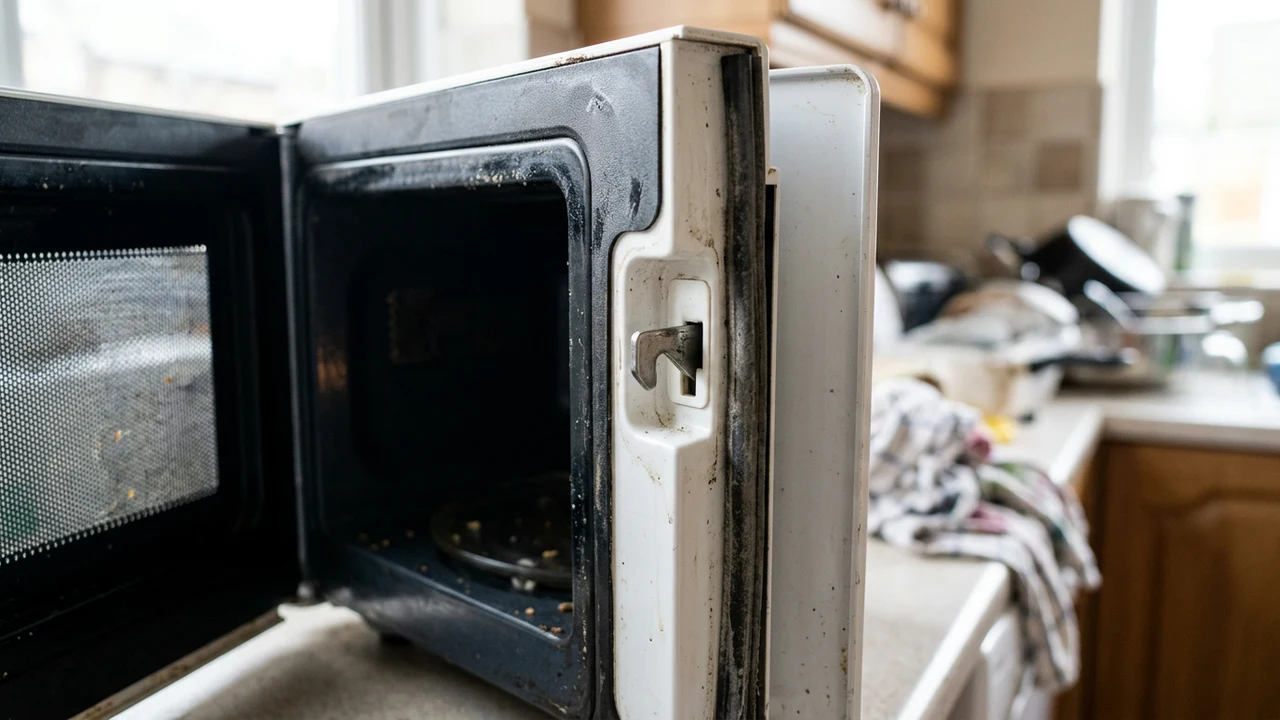
The oven browns one side and leaves the other pale
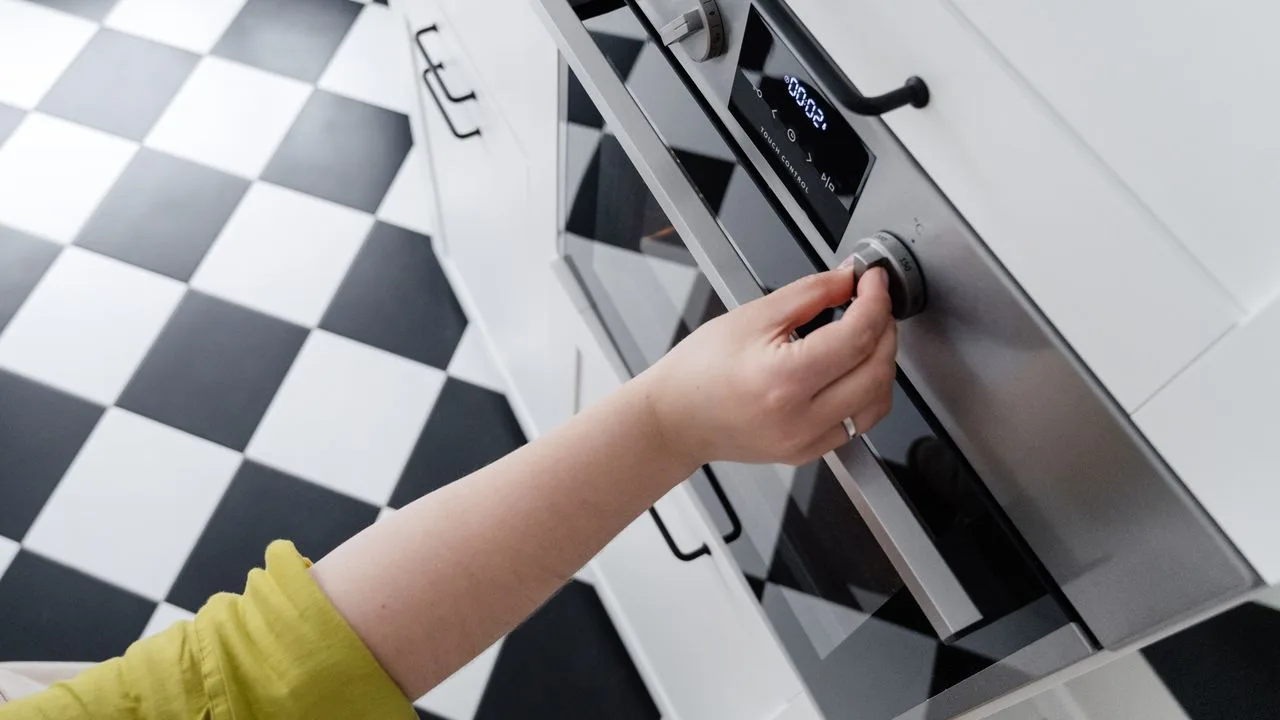
A woman in Figtree rang me about a fortnight ago, apologetic before she had even described the fault, because she thought she was going to sound mad. Her sponge came out with one side risen and golden and the other side pale and sunken, every single time, and she had been turning the tin halfway through for two years to get around it.
She was not mad. She had a door problem and a thermostat that had wandered off, and she had been compensating for both by hand since before the pandemic. Two hours and the oven baked flat and even for the first time in years.
That kind of call comes in far more often than the dramatic ones. Nobody rings the day their cakes start browning unevenly. They ring eighteen months later when the roast is raw in the middle and they have finally had enough.
Start with the piece of paper
Before you do anything else, do the paper test. It takes a minute and it will tell you more than any amount of squinting at the dial.
Oven cold and off. Take an ordinary sheet of A4, put it half in and half out of the door at the top left corner, and close the door on it. Now pull. It should drag. Move around the whole perimeter, corner to corner, a dozen spots, and pull at each one.
Anywhere the paper slides out with no resistance at all, the door is not sealing there. Nine times out of ten you will find the slack in the same place, usually one of the bottom corners or along the top, and that tells you which way the problem runs.
Heat pours out through that gap. The element runs longer to make up for it, the thermostat sits closer to the cold spot than the leak does, and the side of the cavity nearest the leak cooks slower than the rest. That is your one-sided sponge, right there.
Seals go hard before they go missing
The seal around an oven door is usually a woven fibreglass rope, and it does not so much wear out as go stiff. New, it is soft and it squashes flat when the door shuts. After eight or ten years of heating and cooling it has lost that give, and it sits there like a length of garden hose that will not compress. The door closes, the seal touches, and nothing actually seals.
The other end of it is physical damage. Rope seals get snagged by trays, chewed by the corner of a roasting dish, and they pull out of their clips. If yours has a section hanging loose or a bite out of one corner, you have found your problem and you did not need the paper.
Most rope seals clip into holes around the cavity face or hook onto the door itself, and on a lot of models they come off and go back on with nothing more than a firm pull and a firm push. If it is a clip-in type and you can source the right part for your model number, it is a genuinely reasonable job to do yourself. The catch is that a fair few brands now run the seal into a channel in the door glass assembly, and that is a door strip-down, which is not.
One thing worth saying because I get asked: do not go buying a universal roll of seal off a marketplace listing and cutting it to length. The cross-section has to match, the length has to match, and a seal that is 2mm too fat holds the door off the frame and makes the leak worse than it was.
Doors drop, and it is nearly always the hinges
If the paper test comes back slack along the top and tight along the bottom, or the door visibly sits proud of the frame at one corner, the seal is a symptom and the hinges are the cause.
Oven hinges carry a heavy door on a sprung arm, and after enough years the spring tension goes and the pivot wears oval. You will usually feel it before you see it. The door either drops the last few inches instead of easing shut, or it will not stay put halfway and swings all the way down on its own. A door that clangs when you let it go has a hinge that has given up.
Give it the wiggle test. Open the door flat, take a corner in each hand, and try to lift it. There should be almost nothing there. If it lifts a centimetre and drops back, or if one side has play and the other does not, the hinges are done.
They go in pairs. Replacing one and leaving its mate is a false economy, because the good one is then carrying a door it was not designed to carry alone and it will follow the first inside a year.
Hinges are also the one part of this job where I will tell you plainly to leave it. Oven door hinges are heavily sprung, and a sprung hinge that lets go while your fingers are in the path will take a chunk out of them. I have seen the aftermath. Twice was enough.
When the dial and the cavity disagree
Say the door checks out. The seal is soft, the hinges are tight, and it still cooks badly, or everything comes out overdone, or a 180 recipe needs 200 to work.
Buy an oven thermometer. The dial-face type that hangs off a rack costs about fifteen dollars at any kitchen shop and it is the single most useful thing you can own if you cook. Hang it in the middle of the cavity, set the oven to 180, and leave it a full twenty minutes past the point where it beeps ready, because the beep is the air reaching temperature, not the metal.
Then read it. Every oven cycles, so it will swing either side, but the swing should settle around the number you dialled. Fifteen degrees out is ordinary and worth just cooking around. Thirty or forty out, consistently, is a fault.
On an older oven with a physical thermostat, that fault is usually the capillary. A thin sealed tube runs from the control into the cavity, filled with fluid that expands with heat and pushes a switch. If the tube gets kinked behind the fascia or the sensing bulb comes adrift from its clip and ends up touching the cavity wall or sitting in the airflow from the fan, it reads the wrong temperature and the oven obediently cooks at the wrong one. Sometimes it is the clip. Genuinely, sometimes it is a clip.
On anything electronic the sensor is an NTC probe, and it does not drift gently, it goes wrong in a way you can measure. That is a resistance check against the manufacturer's table, which is a five-minute job with the right numbers to hand and a guessing game without them.
There is a middle case that catches people out. A fan-forced oven with a failed fan motor will still heat, because the element is still working, and it will cook very badly indeed, hot at the back and cold at the door. If your oven has gone from even to uneven suddenly rather than gradually, put your ear to it while it is heating and listen for the fan. No fan noise on a fan-forced setting is a different repair to any of the above, and it overlaps with the ground we covered in why an oven will not heat up.
What it does to your bill
An oven leaking heat past a hard seal runs its element more than it should, every time you use it. It is not going to bankrupt anybody, but a Sunday roast in a leaky oven is a longer roast at a higher setting, and it adds up across a year in a house that cooks properly. The government's energy advice on household appliances is worth a look if you want the general shape of it.
The seal is also doing a job you would not think of. The heat escaping past it goes up the front of the door and into the underside of your overhead cupboards. On a few jobs I have been to, the giveaway before anyone mentioned the cooking was a scorched line of laminate above the oven.
Worth doing, usually
A seal and a pair of hinges on an oven that heats properly is straightforward money well spent, and it makes an old unit cook like it did new. A thermostat or a sensor is the same. Where it gets harder is when the door glass has crazed as well, or the fan motor is on the way out and the board is throwing codes, because you are then stacking parts onto an appliance that has already told you what it thinks. We go through how we weigh that up in repair or replace.
Before you spend anything, two checks. If the oven is only a few years old, a door that has dropped or a thermostat that has drifted is not automatically your cost to carry, because consumer guarantees keep running after the manufacturer's warranty is finished, and nobody expects a five-year-old oven to need a hinge set. And if your oven has a pyrolytic cycle, the seal and the hinges are exactly what that cycle punishes hardest, which is worth reading alongside what goes wrong after a self-clean.
Where the line sits
Yours: the paper test, the wiggle test, the thermometer, clipping a rope seal back into place if it has simply popped out, and easing off the self-clean cycle if you run one monthly out of habit.
Ours: hinges, a seal that lives inside the door assembly, the thermostat, the sensor, the fan motor and anything that needs the oven pulled out of the cabinetry. Most wall ovens around here are hardwired rather than plugged in, and disconnecting one is licensed electrical work in this state.
We repair ovens and cooktops on every major brand from Helensburgh through Wollongong and down to Nowra. The technician diagnoses and quotes before touching anything, and the assessment fee is $125 across the Illawarra and $145 further out. Book a repair or call 02 4229 3777.
If you do one thing after reading this, buy the fifteen dollar thermometer. Half the people who ring me convinced their oven is broken have an oven that is fine and a recipe written for someone else's, and the other half find out their oven is running forty degrees cold and have been quietly blaming themselves for years.