Oven Fan Getting Noisy? How to Read the Racket
Most weeks somebody describes their oven fan to me over the phone, and most weeks they describe it well enough that I know what I am bringing before I leave the workshop. It is one of the few faults you can genuinely diagnose by ear.
The trick is that ovens have two fans, and half the calls I get about a noisy one are not about the fan people think they mean.
There are two fans in there
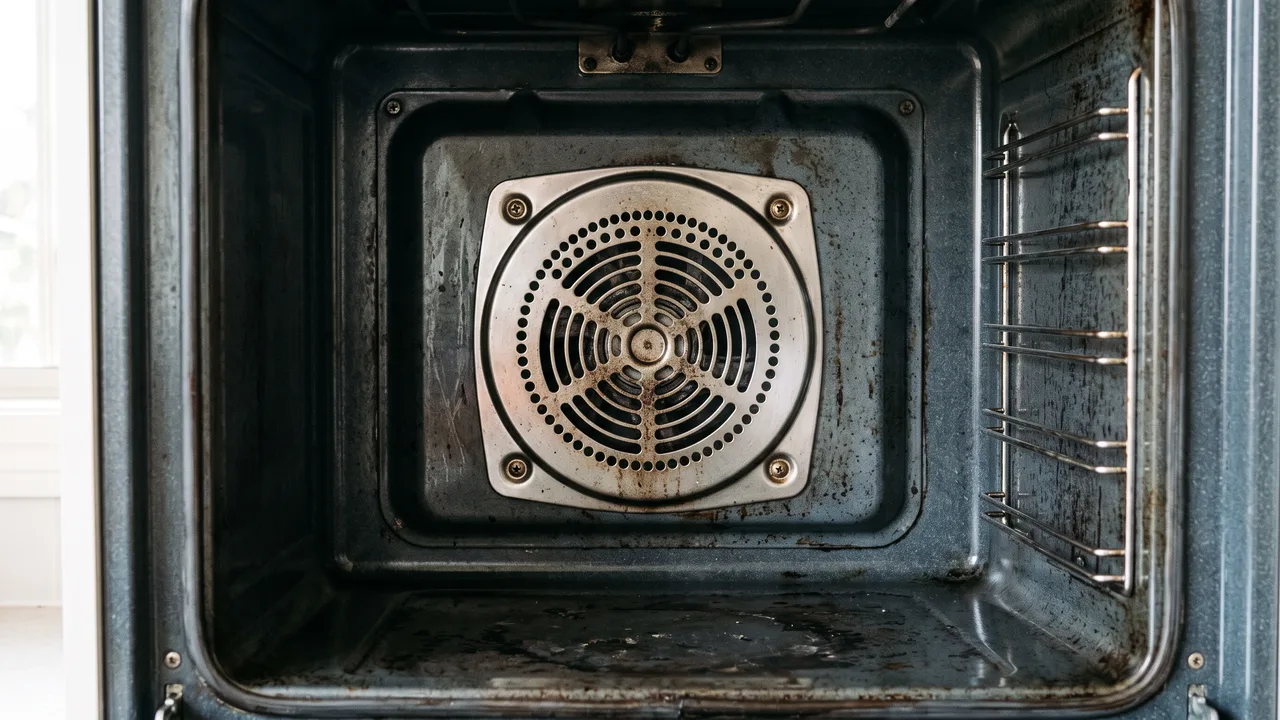
The one you know about sits behind the back panel inside the cavity, in the middle, usually with a round metal cover over it. That is the convection fan, the thing that makes fan-forced fan-forced. It pushes air over a ring element and moves the heat around, and it only runs while the oven is cooking.
The second one lives outside the cavity, up behind the fascia or above the door, and its whole job is to keep the electronics and the surrounding cabinetry from cooking. That is the cooling fan, and on a lot of ovens it keeps running for a good while after you have switched everything off. Sometimes half an hour.
So before anything else: if your complaint is that the fan will not stop after you have finished cooking, the oven is almost certainly fine. That is the cooling fan doing exactly what it was built to do, and it is more noticeable on a wall oven in a quiet kitchen than it is on a freestanding stove with a range hood going. If it never stops at all, hours later, cold, that is worth a look, because it points at the thermal switch that is supposed to cut it.
Everything below is the other fan.
A whine or a grind that rises with the oven
If the noise is a low grumble that becomes a whine, and it tracks with the oven rather than coming and going, that is the fan motor bearings.
They dry out. The motor sits directly behind the back wall of a box that spends its life at 180 degrees, and eventually the grease in the bearing gives up. It starts as something you only hear when the kitchen is quiet, then a few months later it is the loudest thing in the room.
Nothing to do at home about it, and nothing urgent either, but it does not fix itself and a seized fan motor takes the fan-forced setting with it. If the oven has started cooking unevenly as well, browning one side and leaving the other pale, the fan may already be slowing under load, though a hardened door seal or a drifted thermostat does the same thing. Oven doors, seals and thermostats has the paper test that tells the two apart in about a minute.
A rhythmic scrape or clatter
Different noise, different cause. If it is a regular tick, scrape or clatter rather than a continuous grind, the fan blade is touching something.
Usually the baffle, which is the perforated metal cover over the fan. Push a heavy roasting tray hard against the back of the oven a few times and the baffle moves in a couple of millimetres. That is enough. Same thing happens when the screws holding it work loose over the years, or when a sheet of foil gets sucked up against it.
Oven off at the wall and cold, have a look. Is the baffle sitting flat, or has one corner pulled in? Is anything down the back of a shelf? Are your trays long enough to be pressing on it when you push them all the way in? That last one catches a lot of people who have bought new bakeware.
If the baffle is obviously bent or a screw is missing, leave it and book it. The fan blade is on the other side of that panel and the ring element is wrapped around it.
A fan that has gone quiet
Worth mentioning because nobody rings about it. A fan-forced oven that has gone silent has usually lost the fan motor, and what you notice first is not the silence, it is that things take longer and cook unevenly.
An easy check: set the oven to fan-forced, wait a minute, and hold the back of your hand near the door vent. You should feel air moving. Then switch to conventional bake and compare. If there is no difference, the fan is not turning.
That said, an oven that is not getting hot on any setting is a different fault altogether, generally the element rather than the fan, and an oven that will not heat up runs through it.
What it costs to sort
Fan motors and baffles are both routine parts rather than specialist ones, and the repair happens in your kitchen with the oven staying in its cabinet. The only time an electrician has to be involved is if a hardwired wall oven needs to come off the fixed wiring, because that connection work is licensed electrical work in NSW, and we say so at the assessment if a job crosses that line.
The assessment fee is $125 across the Illawarra and $145 further out on the South Coast, and the repair price comes before any work starts. Every completed repair carries our warranty. On an older oven it is also worth thirty seconds on the product safety recalls register before you spend anything.
When you ring, tell us which of the three noises it is and whether the oven still cooks properly. That is genuinely what decides whether the motor goes on the van. The rest of the fault list is on the oven repair page, or book online and put the model number in the notes.