I keep a diary because I have to for the invoicing, not out of any great interest in data. But you cannot look back through fifteen years of it without noticing that the year has a shape, and the shape barely changes.
Fridges die in February. Dryers die in the first week of proper cold, which down here is usually somewhere in the back half of May. Ovens die in the third week of December, always, and every year I tell people to run theirs in November and every year almost nobody does.
None of that is coincidence and none of it is bad luck. Appliances fail when they are asked to work hardest, and on a coast like this one they also fail because of where they live. So here is the year as I see it from the van, and the small jobs that would keep you out of my diary.
Late summer, when the fridges give up
A fridge is a heat pump. It moves heat out of the cabinet and dumps it into your kitchen through the condenser coils, and the hotter the room, the harder that gets. In February the kitchen is thirty degrees, the garage where the second fridge lives is closer to forty, and a compressor that was coping in September is now running twenty hours a day and losing.
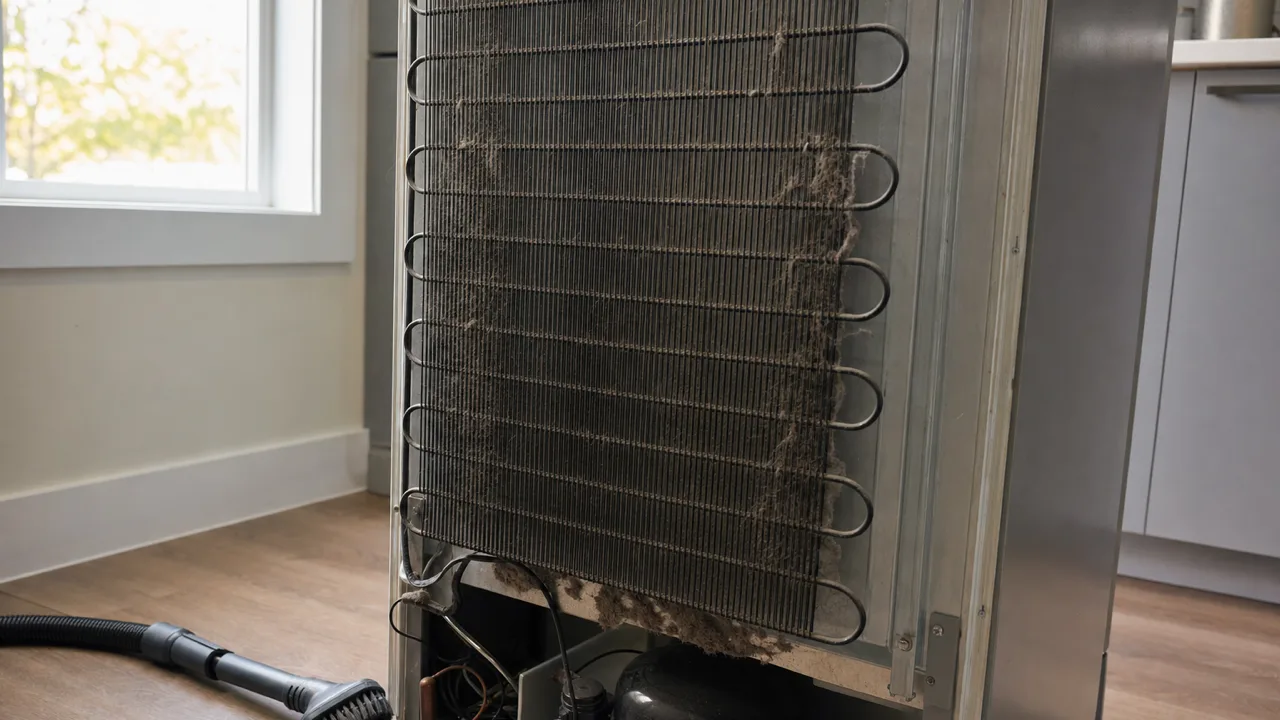
What tips it over is almost never the refrigeration. It is dust. Condenser coils on the back or underneath fur up with lint and pet hair, the coil stops shedding heat, and the machine cooks itself. Pull the fridge out once a year and go over the coils with a vacuum brush and a dry paintbrush. Ten minutes, no tools, and it is the single highest-value maintenance job in the house.
While you are behind there, check the clearance. A fridge shoved hard against a wall in a tight cabinet has nowhere to put the heat. The manual will tell you what it needs and it is usually more than people leave it.
The second job is the seal. Shut the door on a sheet of paper and pull. If it slides out without dragging, warm air is getting in all day, and the fix is a part rather than a new fridge. There is a proper walkthrough in replacing a fridge door seal.
Do the coils and the seal in November and you will very likely not meet me in February.
Autumn is dryer month, and nobody treats it that way
The first cold snap is when the dryer comes out of hibernation after five months of not being touched. It has a filter full of last winter's lint, a vent hose that has been squashed flat behind the machine since April, and in a lot of laundries a bracket that has been quietly rusting on the wall.
That combination is why the dryer calls all land in a two week window. A choked airflow path makes the machine run hotter and longer, the thermal cut-out trips, and if it keeps happening the element goes. Most of the dryers I condemn were killed by lint over a period of years rather than by any one failure.
So before the first cold week, not after: clean the filter properly, including under the flap where the fine stuff collects. Pull the machine out and check the vent hose is round rather than crushed. Look at the wall bracket if it is mounted, particularly in a garage laundry anywhere near the water, because rust in a bracket is not a thing you want to discover by hearing it. And run it empty for ten minutes with your hand at the outlet to feel that it is actually pushing hot air.
If it turns but does not dry, the sequence is in a dryer that runs but will not heat.
Winter belongs to the washing machine
Nothing about winter is hard on a washing machine mechanically, but the load goes up. More layers, more towels, wetter kids, and in a lot of houses the machine goes from five loads a week to nine or ten. Everything that was slowly wearing out now wears out at twice the rate.
It is also the season where the front loader smell becomes obvious, because the laundry is closed up and cold and the door gets shut after every wash. Leaving the door and the detergent drawer ajar between loads costs nothing and prevents most of it, and there is more on the maintenance side in why regular washing machine maintenance matters.
The winter job worth actually doing is the drain pump filter. Behind the flap at the bottom front, towel down, unscrew, clear out the coins and the hair clips. Twice a year is plenty, and it heads off the fault that generates more calls than any other.
Spring is when you deal with the salt
This is the part that is genuinely different here and does not apply to somebody in Bathurst.
Salt air corrodes everything, and it does not need to be beachfront to do it. Port Kembla, the northern beaches, anywhere around the lake and the whole run down past Shellharbour to Jervis Bay. What it attacks is metal that stays damp: external condenser coils on a garage fridge, cabinet screws, dryer element terminals, hinge pins, the earth points on anything mounted to a wall.
Once a year, pick a weekend in spring and go around the things that live in the garage, on a deck, or in an open carport. Wipe the salt film off the back of the beer fridge. Look at the feet and the screws underneath the dryer. Check the hinges on anything that lives outside. If a coil looks white and furry rather than dusty, that is salt, and a soft brush and a damp cloth will get it before it eats through.
There is no brand that is immune to this and no coating that beats a rinse and a look. It is the one job I put ahead of everything else for anybody living within a couple of streets of the water.
Spring is also when the storm season starts building, and the damage from a blackout almost never happens during the outage. It happens on restoration, when everything in the house tries to start at once. If you have been through one, what to check after a blackout is worth ten minutes.
December, and the oven you have not turned on since Easter
Every year. The oven gets loaded up for Christmas after eight months of light duty, and it fails on the day it matters most, and by then every repairer in the region is booked out and the parts warehouses are shutting for three weeks.
Run the oven in November. Put it on 180 for half an hour with nothing in it and stand there. Does it get to temperature in a sensible time. Does the fan run without rattling. Does the door shut flush and stay shut. Does anything smell like it is burning that should not be. Thirty minutes in November against a cold roast in December is not a close call.
The rangehood is the other Christmas one, because it goes from occasional use to running for six hours straight, and a filter packed with a year of fat is both useless and a genuine fire risk. Soak the metal filters in hot water with dishwasher powder. If the fan is loud or the extraction has faded, a rangehood that has stopped pulling covers what is behind it.
The whole year on one page
Coils and door seals in November, before the heat. Dryer filter and duct before the first cold week in autumn. Drain pump filter twice a year, whenever you think of it. Salt wipe-down in spring on anything in a garage or outside. Oven test run in November. Rangehood filters before December.
That is maybe two hours across a whole year, none of it needs a tool more complicated than a vacuum, and it removes a good half of what I get called out for. It also makes the repair-or-replace decision easier when something does fail, because a well-kept appliance is usually worth fixing and a neglected one often is not. If you are at that point, the Energy Rating Label numbers on fridges and freezers are the honest way to compare what an old one is costing you against a new one, and it is always worth putting the model number into the product recalls register before you spend anything.
When something does go, we cover Helensburgh through Wollongong and down past Kiama to Nowra. The technician diagnoses the fault and quotes before starting, and the assessment fee is $125 across the Illawarra and $145 further out. Book a repair or call 02 4229 3777.
The one thing I would move to the top of the list, if you only ever do one of these: the fridge coils. It takes ten minutes and it is the difference between a fridge that lasts twelve years and one that lasts seven.